
Last updated November 23, 2026
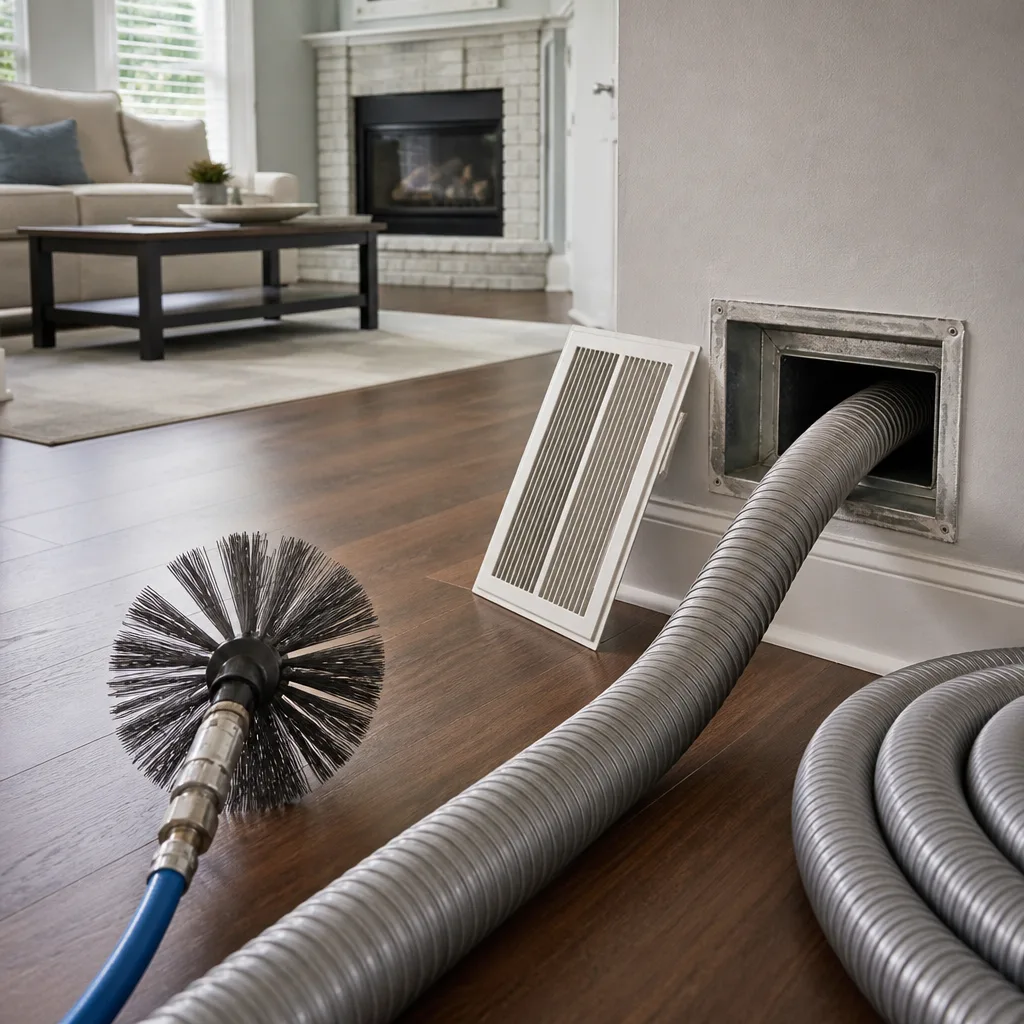 Whole-home duct cleaning
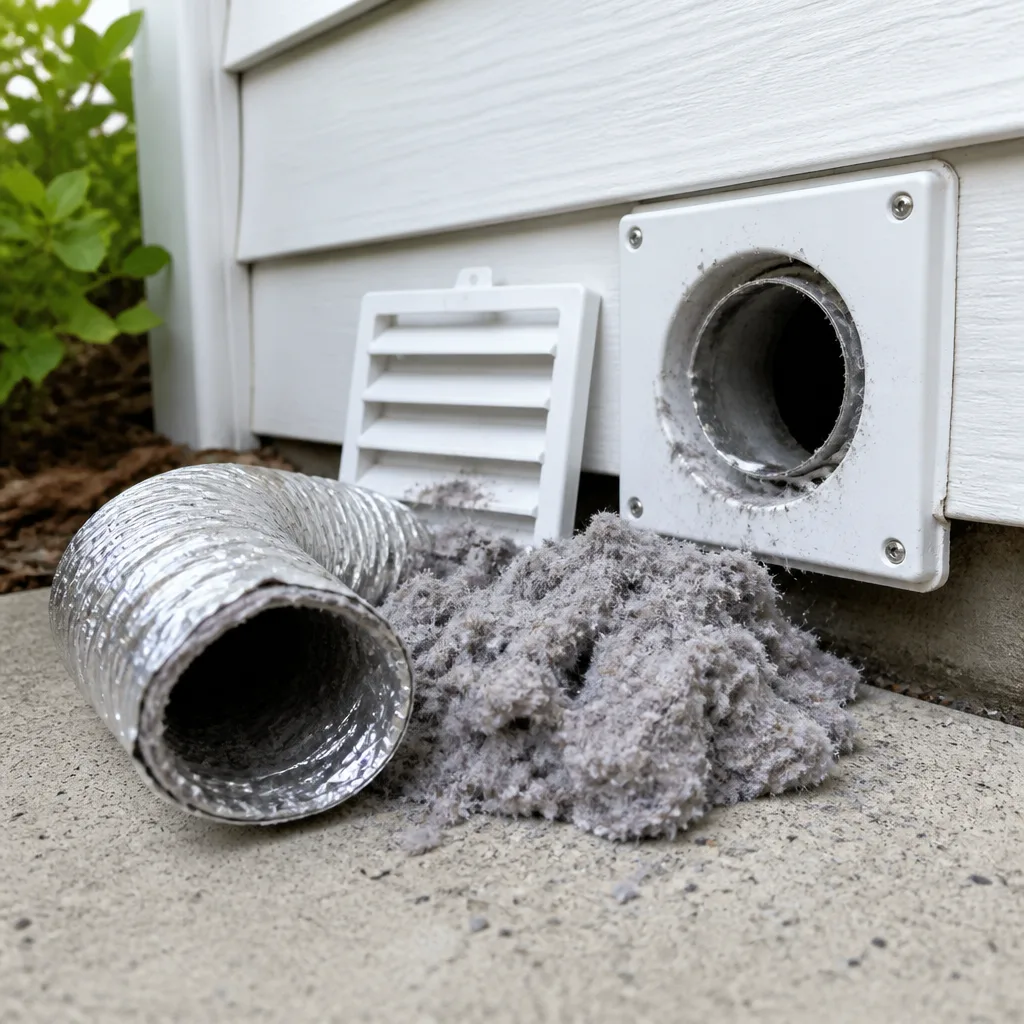 Dryer vent cleaning
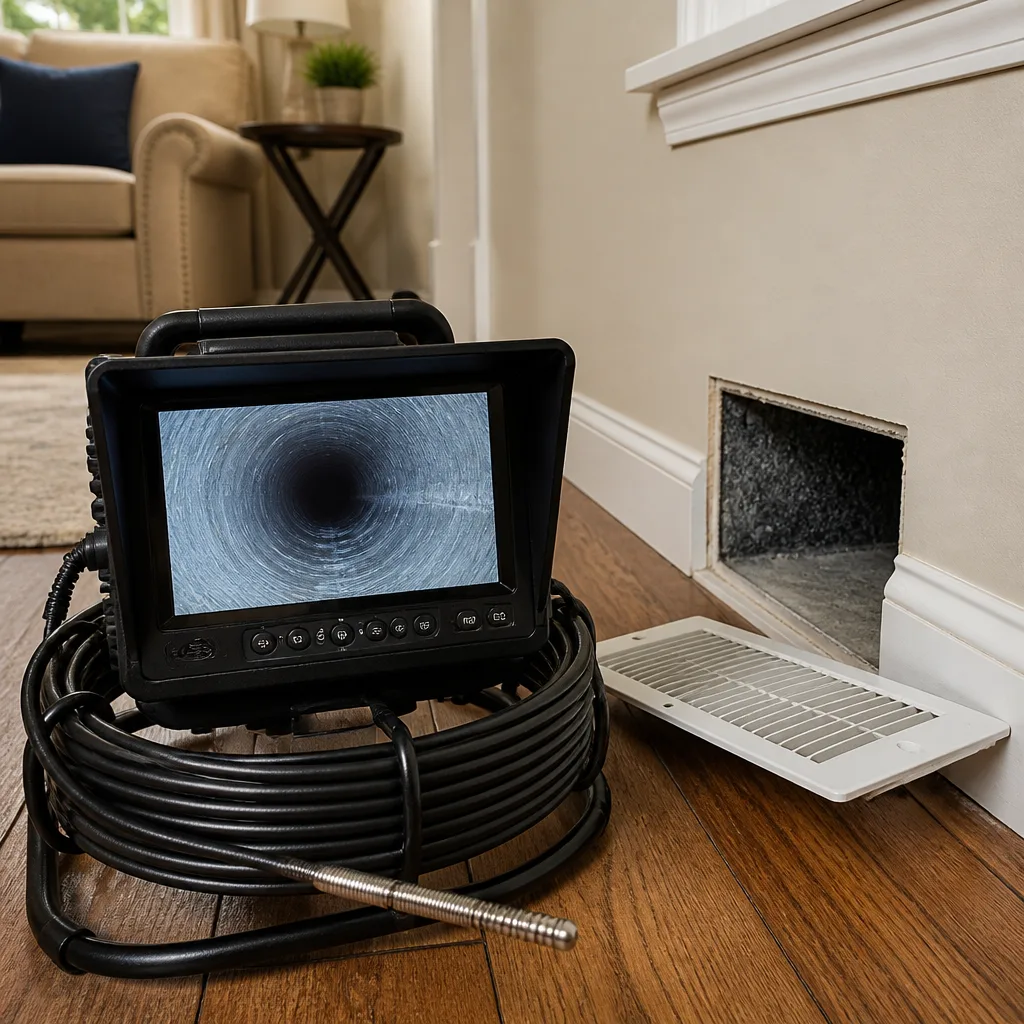 Camera inspection
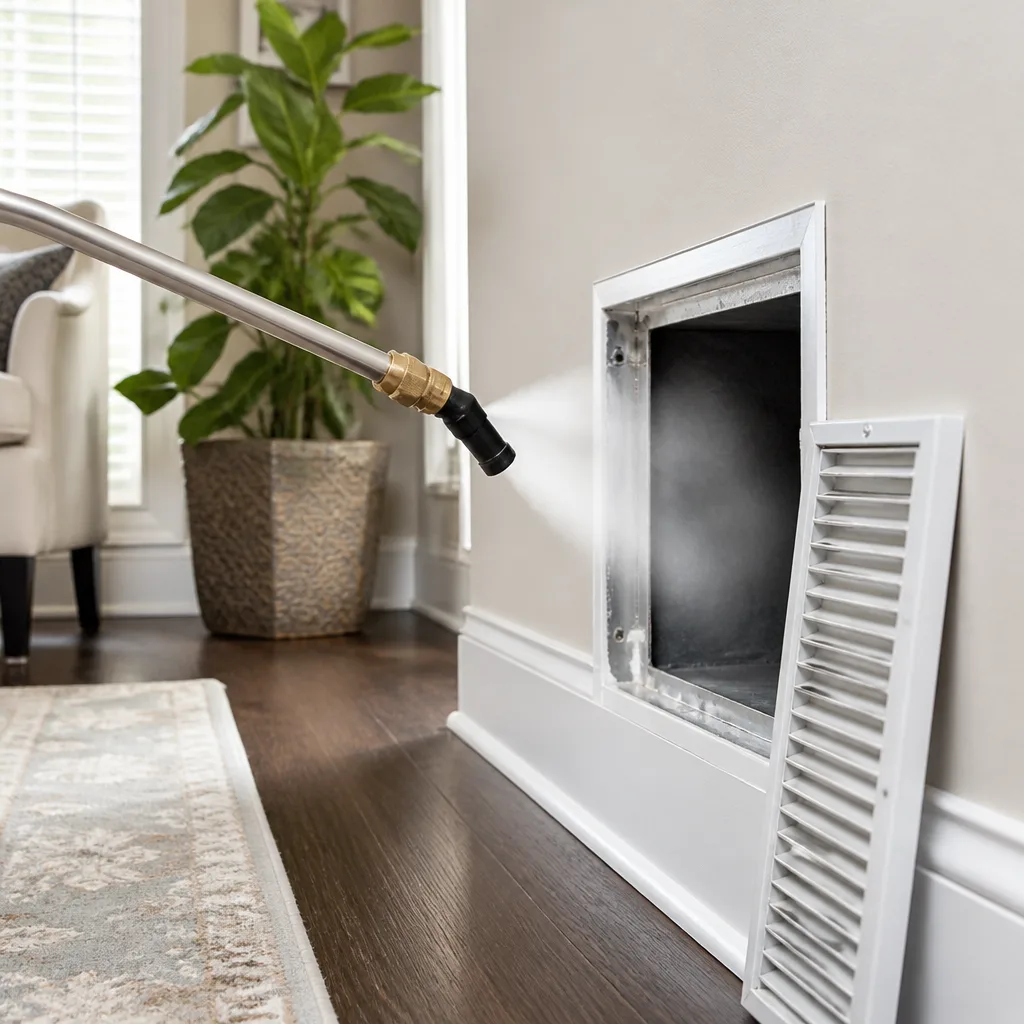 Sanitizing & deodorizing
Whole-system duct and dryer vent check with before-and-after photos - you see exactly what came out of your vents
That "$99 whole-house special" is a bait ad - the real number appears once they are in your hallway, or the "clean" is a shop-vac at the register. We photograph the inside of your ducts before and after instead.
Air Duct Cleaning Emergency Preparedness Guide for Centennial Homes
Most Centennial homeowners have a plan for a wildfire evacuation order. Fewer have one for what happens inside the ductwork after the smoke clears. Here’s the part almost nobody thinks about: three days of wildfire smoke in the air doesn’t just pass through your house. Some of it settles into the return ducts, the supply runs, the plenum, the blower housing. Then the furnace cycles back on and pushes that stored residue back into your living room, week after week. This guide covers the post-emergency duct protocols that actually matter in Centennial: smoke events, water intrusion, remodels, and the prep work you can do before any of it. It’s the sequence to follow when your air handling system has been through something.
Quick Answer
Air duct cleaning after wildfire smoke in Centennial should happen within days of the smoke clearing, not at the end of the season, and it should include mechanical brush cleaning of every duct run plus HEPA-rated vacuum extraction plus a filter upgrade to MERV 13 or higher before the system runs again. Post-flood or basement water intrusion gives you a 48-hour window to dry the ducts before mold colonization starts. Pre-emergency prep (sealed returns, upgraded filtration) reduces how much smoke enters the system in the first place.
Styles & brands we work with
- Whole-home duct cleaning
- Dryer vent cleaning
- Camera inspection
- Sanitizing & deodorizing
Table of Contents
- Post-Wildfire Smoke Protocol for Centennial Ductwork
- Post-Flood and Basement Water Intrusion
- Post-Renovation Protocol for Duct Interiors
- Pre-Emergency Prep: Sealing and Filtration
- Red Flag Warnings and What to Do Differently
- Finding an Emergency-Ready Duct Cleaning Contractor in Centennial
- Common Mistakes to Avoid
- When to Call a Professional
Post-Wildfire Smoke Protocol for Centennial Ductwork
Centennial sits in a corridor where wildfire smoke from the foothills and Front Range fires can settle in for days without clearing. Those smoke events push fine particulate past standard filters, past window seals, and into the duct system through return air pathways. The particulates don’t vanish when the air outside clears. They sit on duct walls, on the blower wheel, on the evaporator coil. Every heating cycle lifts them back into circulation.
The window to deal with this is shorter than most people assume. Fine smoke particulate is small enough to stay suspended and stay acidic; the longer it sits, the more it bonds to duct surfaces and the harder mechanical cleaning has to work to remove it. Here’s what to do:
- If smoke is still outside: shut the system off entirely if you can tolerate the temperature. If you can’t, run the fan continuously (not just on demand) and use the highest MERV filter the system is rated for. Running the fan nonstop forces air through the filter more often, but it also pulls more smoke into the return ducts. The call has to be made on comfort.
- The day the smoke clears: open the windows, air the house out, and hold off on running the system until the indoor air smells neutral again.
- Upgrade the filter before reactivating: swap to a MERV 13 pleated filter, and verify the furnace is rated for the pressure drop. Most modern Centennial furnaces handle MERV 13 without strain; older units (especially those in 1970s and 1980s builds) sometimes don’t. A poorly matched filter can starve airflow and stress the system.
- Schedule mechanical cleaning within 2 to 4 weeks of the smoke event, before the first heating season. The system will cycle enough in a few weeks to highlight any lingering smell or haze coming from vents.
- Test the smell before assuming it worked: run the heat for 10 minutes about a week after cleaning. If the air still carries smoke odor, ask the contractor to check the blower, the coil, and any inaccessible duct runs.
Centennial homes with older flex duct – common in some of the 1990s subdivisions south of Arapahoe Road – can hold smoke odor in the corrugations longer than metal ducting. Those runs often need a second cleaning pass. Our own approach on a smoke event job runs Rotobrush mechanical brushes through every accessible run, and the Nikro HEPA vacuum captures what’s dislodged before it can re-enter the living space. Blowing compressed air through a smoke-affected system without a HEPA-rated capture unit just turns a stored problem into an airborne one.
Post-Flood and Basement Water Intrusion in Centennial
Centennial sits at roughly 5,500 feet with cold winters and rapid snowmelt in late February and March. That combination produces a specific failure mode: sump pumps that run hard during freeze-thaw cycles, window wells that collect meltwater, and finished basements in neighborhoods like Foxridge and Willow Creek that take on water. When water reaches the basement, it reaches the return air trunk and the lowest duct runs first.
The 48-hour window is not an exaggeration. Mold colonization on wet duct liner, on galvanized metal, and on flex duct insulation can begin within two days of moisture exposure. Duct liner, in particular, is an organic substrate; once mold takes hold it usually cannot be remediated in place and the liner has to be removed and replaced. That’s the part most water-damage crews don’t tell homeowners. They dry the carpet, dry the drywall, and leave the ducts alone.
What to do:
- Shut the system off immediately if any ductwork was submerged or water-logged. Running the fan pulls moist air through the entire system and spreads moisture to runs that weren’t flooded.
- Photograph everything – the water line, the duct runs, the equipment. Insurance adjusters will want it and most policies cover duct cleaning after a covered water loss.
- Contact a water damage restoration company first, not a duct cleaner. Moisture removal is the first step.
- Schedule duct cleaning and sanitizing within 48 hours of the ducts being visibly dry. An Abatement Technologies air scrubber setup is what’s needed for this stage; the goal is to knock down any mold spores that formed during the wet period before they colonize further or get pushed through the living space.
- Consider duct sealing. In basements that took water once, gaps and pinholes in the duct system let in soil gases and moisture on the next event. Sealing closes those pathways.
Dryer vent duplication is worth flagging here too: a flooded basement that reaches the laundry area often leaves lint wadding up in the vent line. That’s a fire risk on the next dryer cycle. If the basement took water, have the dryer vent line checked before running the dryer.
Learn more about our full air duct cleaning process for post-water events, and about the safety side of dryer vent cleaning after any basement water intrusion.
Post-Renovation Protocol for Duct Interiors
Drywall dust is the single most damaging contaminant for residential duct interiors. It’s alkaline, it’s fine enough to stay airborne for hours, and it bonds to metal and duct liner once moisture (from paint, from humidifiers, from cooking) touches it. A kitchen remodel that involves moving walls without taping off the registers can leave drywall dust in the system for years, feeding the blower, coating the coil, and slowly degrading airflow. Centennial has seen a steady run of kitchen and basement remodels in the older subdivisions, and the drywall dust aftermath is a familiar call.
The protocol before, during, and after a remodel:
- Before demo day: tape plastic over every supply and return register in the work zone. Cover the furnace and air handler completely. This one step prevents roughly 80 percent of the eventual cleanup problem.
- During the project: don’t run the HVAC system in the work zone. If you must, change the filter weekly. Seal the return closest to the project.
- After final paint and flooring: swap the filter to a fresh high-MERV pleated, then run the fan for 30 minutes to pull residual air particulate into the filter before any duct cleaning.
- Schedule a full duct cleaning for any ducted system that served a construction zone. The brushes and HEPA vacuum combo matters here – drywall dust compacts quickly and needs mechanical agitation.
- Check the coil and blower, not just the ducts. Drywall dust builds up on the evaporator coil and the blower wheel, which is HVAC cleaning territory, not duct cleaning territory. Both are part of the same job on a post-renovation call.
Basement remodels deserve a note of their own. When a basement is being finished, the return trunk often runs through newly enclosed space, and the new framing may capture dust that wasn’t there before. Have the whole system looked at once the drywall is finished and before furniture goes in. It’s cheaper than discovering the problem six months later.
Pre-Emergency Prep: Duct Sealing and MERV Upgrades
The cheapest duct work is the duct work you do before a fire, a flood, or a furnace failure. Centennial’s fire season has stretched well into fall in recent years, and the smoke that drifts into the metro during those stretches does most of its damage through leaks and gaps in the duct system and the building envelope, not through the registers directly. Sealing the system and upgrading the filter reduces that infiltration before it happens.
What’s worth doing:
- Duct sealing: mastic sealing on accessible joints and seams, plus aerosol sealing for the inaccessible runs. This is the single highest-value prep step. It also saves energy year-round by reducing the amount of conditioned air that escapes into the attic or crawlspace on every cycle.
- MERV 13 filtration with a filter cabinet that accepts a deeper pleated filter (4-inch to 5-inch) if the system will support it. A deeper filter has more surface area and doesn’t choke airflow the way a 1-inch MERV 13 can.
- Return air pathway review: most homes in Centennial have one or two large returns. A return that pulls from a hallway shares proximity to exterior doors. Sealing that door sweep or adding a return closer to the main living space reduces how much exterior smoke the system grabs.
- AprilAir and Honeywell IAQ integration if the homeowner wants whole-home media filtration or humidity control. These are the products we install and recommend because they close the loop on air quality post-cleaning – a cleaner duct that hands back into a poorly filtered system re-soils itself in a year.
Start this prep work in spring, before fire season. That gives you the whole late spring and summer to identify any problems (weak returns, blocked registers, filter mismatches) while contractors aren’t slammed.
Red Flag Warnings and What to Do Differently
In Centennial, a Red Flag Warning means sustained winds, low humidity, and critically dry fuels in the surrounding foothills. Even when the fire isn’t local, the smoke can drift in. On Red Flag days during fire season, and in the days after, treat your duct system as part of the air quality response – not an afterthought.
Here’s what changes on a Red Flag day:
- Close windows and exterior doors. Bring pets in. The usual advice, but apply it to the duct system too.
- Run the HVAC fan continuously in fan-only mode with a MERV 13 filter in place. This doesn’t clean the outside air; it filters the interior air more often, which is the point.
- Skip the whole-house fan, cooktop exhaust, and bathroom exhaust fans unless absolutely necessary. Each of them runs negative pressure in the house and pulls exterior smoke in through window seals and door gaps. In a house with a leaky return path, that smoke lands straight in the ducts.
- After the smoke clears, do a home walkthrough and check for smoke smell from the registers. Visible haze from a vent is a red flag. So is lingering odor on the furnace filter. Neither is normal.
- If the smoke lasted more than two days and the house smells smoky inside, schedule duct cleaning. If the smoke lasted less than a day and the house smells clean, you can likely wait until the scheduled cleaning cycle.
We don’t want to overstate the risk on shorter smoke events. A few hours of light haze in the air doesn’t require an emergency response, and it isn’t practical to clean ducts after every smoke drift. The line is at odor: if the smell persists indoors for days after the outside air has cleared, particulate has found its way into the system and the system needs attention.
Finding an Emergency-Ready Duct Cleaning Contractor in Centennial
Before you need a contractor for a post-emergency duct job, have one lined up. The duct cleaning industry has a wide range of capability, and the difference between a good one and a cheap coupon-book operator is widest on emergency calls. Here’s what to look for.
What “emergency service” should actually include
- Mechanical brush equipment (Rotobrush or equivalent). Compressed-air blow-outs don’t count as cleaning and can make a smoke or drywall-dust situation worse by redistributing contaminants.
- HEPA-rated vacuum extraction (Nikro or similar). Without it, the brushes loosen particulate that ends up in the living space.
- Air scrubbing or sanitizing capability for post-water events. Ask specifically what equipment they use for mold-affected ducts.
- The ability to seal, repair, and install filtration – not just clean and walk away. A contractor who only cleans leaves you needing a second contractor for filtration and repair.
How to vet a contractor before the emergency
- Ask what equipment they use for smoke-affected or water-damaged ducts. Vague answers (“professional-grade”) mean nothing. Specific brands and models matter.
- Ask what the written estimate covers. It should be a flat price per system, agreed before work starts, with before-and-after photos of your own ducts as part of the deliverable.
- Ask what happens if mold is found. A good contractor either handles it or refers it to a remediator with clear criteria.
- Ask how they handle post-emergency scheduling. Duct cleaning is a scheduled job, not same-day work; the question is how quickly they can get you on the calendar once you’ve cleared the smoke or the water damage.
- Verify that the local pro is licensed and insured as their state requires. We connect you with independent local professionals who meet that bar.
Fill in your own line at Centennial Air Duct Cleaning Pros when you’re ready to talk about a scheduled cleaning, sealing, or post-emergency walkthrough. It’s worth doing the pre-emergency call now, not the day after the fire.
Common Mistakes to Avoid
- Assuming the ducts self-cleaned once the outside air cleared. The particulate that entered during a smoke event settles and stays. It needs mechanical removal, not patience.
- Running the HVAC through a construction zone without sealing the registers. Drywall dust becomes a permanent problem once it bonds to duct liner, and the eventual cleaning job doubles in scope.
- Upgrading to MERV 16 without checking furnace rating. A filter that’s too dense for the blower starves airflow and shortens motor life. MERV 13 is the practical high end for most Centennial homes unless the system was designed for higher.
- Skipping dryer vent checking after basement water intrusion. Wet lint wads up. That’s a fire hazard on the first dryer cycle after the basement dries.
- Hiring strictly on coupon price. The dollar figure on the coupon book is rarely the figure on the invoice after the technician “finds problems.” Ask for a flat per-system price in writing before the work starts.
- Cleaning the ducts but ignoring the coil and blower. The ducts are the delivery system; the coil and blower are where the buildup actually accumulates. Both are part of the same job.
- Forgetting the return air pathways. Centennial homes with one big hallway return are common. The return-side ductwork takes the most contamination and is also the run most often skipped by cheap cleaning crews.
When to Call a Professional
You need a trained technician, not a homeowner with a shop vac, in these situations: any smoke event that left lingering odor in the house for more than a few days; any basement water intrusion that reached ductwork or duct insulation; any remodel that involved drywall work in a space served by the HVAC system; any mold smell near a register; any duct that’s visibly collapsed, disconnected, or held together with tape; and any dryer vent that’s never been cleaned on a home built before 2000. Duct systems have electrical components, sealed combustion appliances nearby, and gas connections in the same mechanical space – opening that system up without training can be hazardous. Centennial Air Duct Cleaning Pros offers free estimates in Centennial – call (877) 820-8053. The estimate is a flat written price per system, agreed before work starts, with before-and-after photos of your own ducts as part of the deliverable.
See the difference
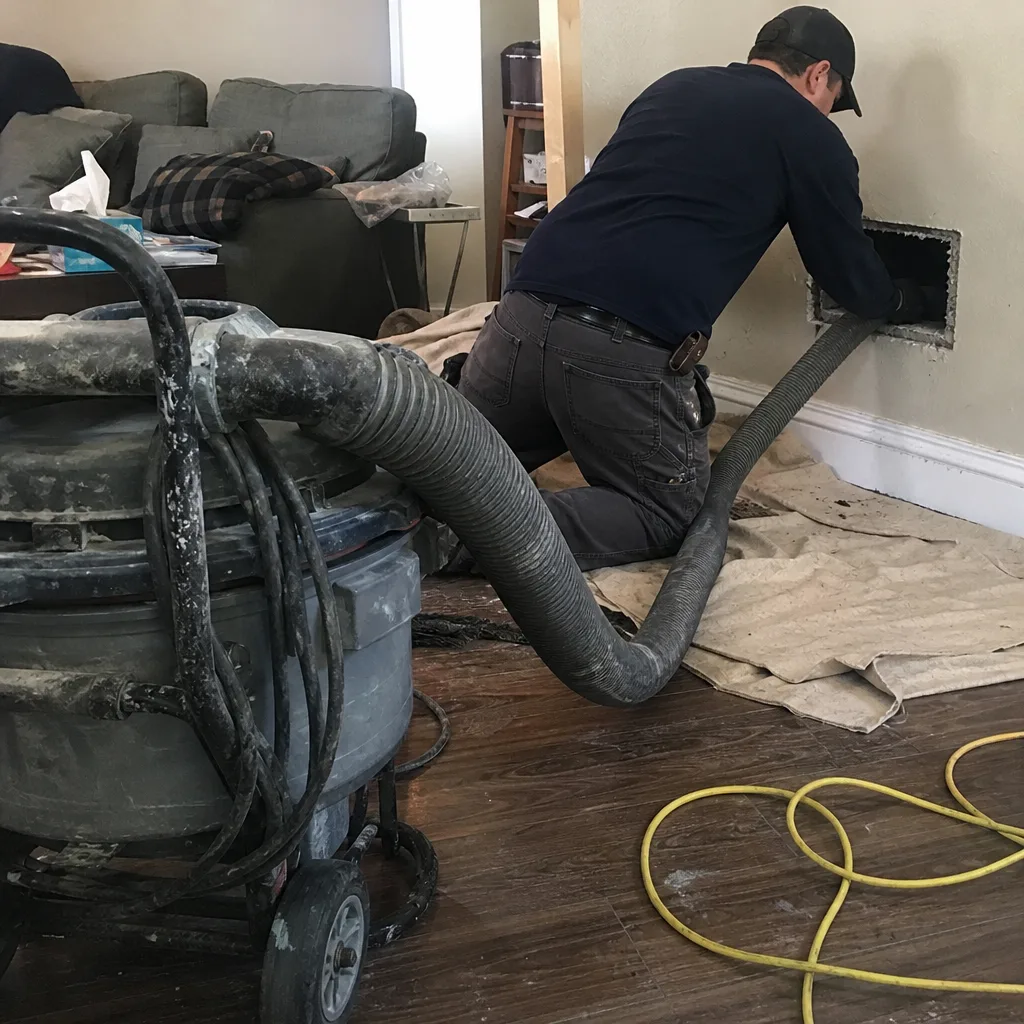 Before
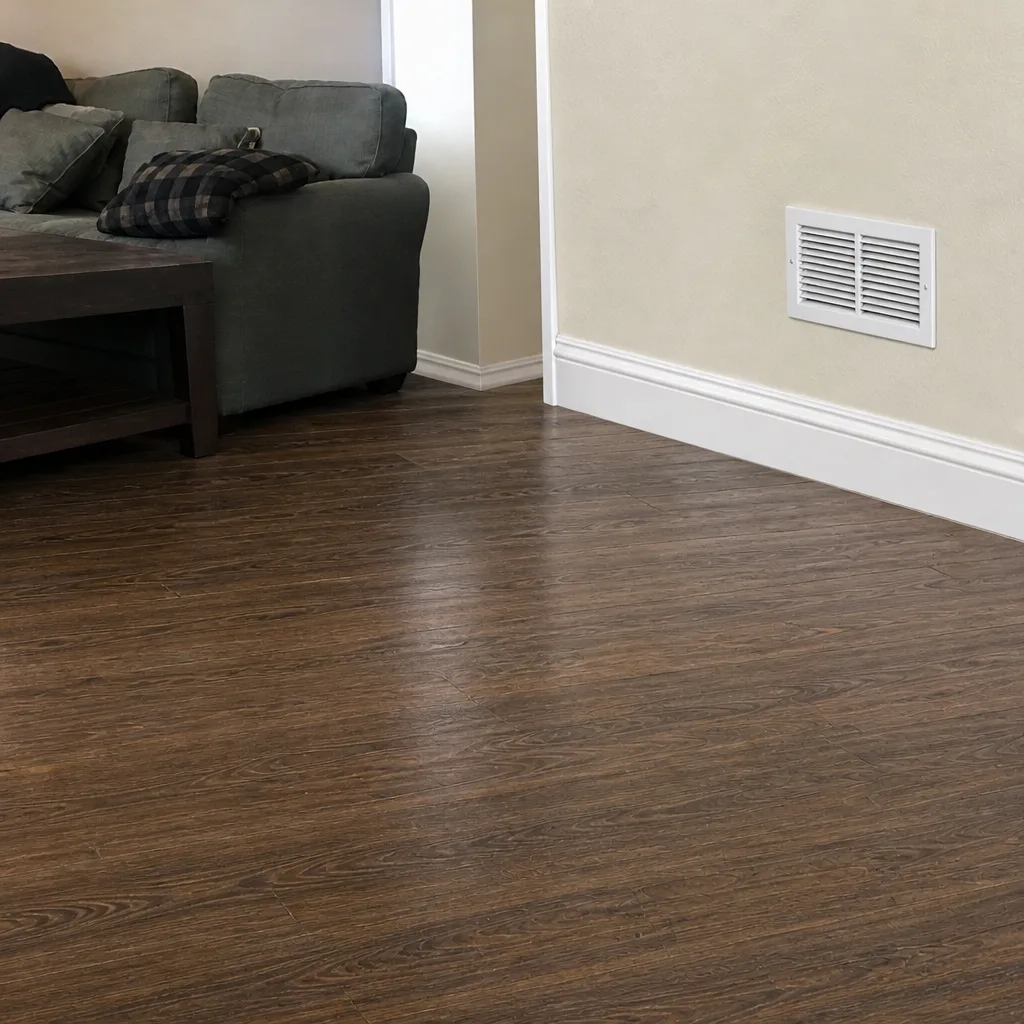 After
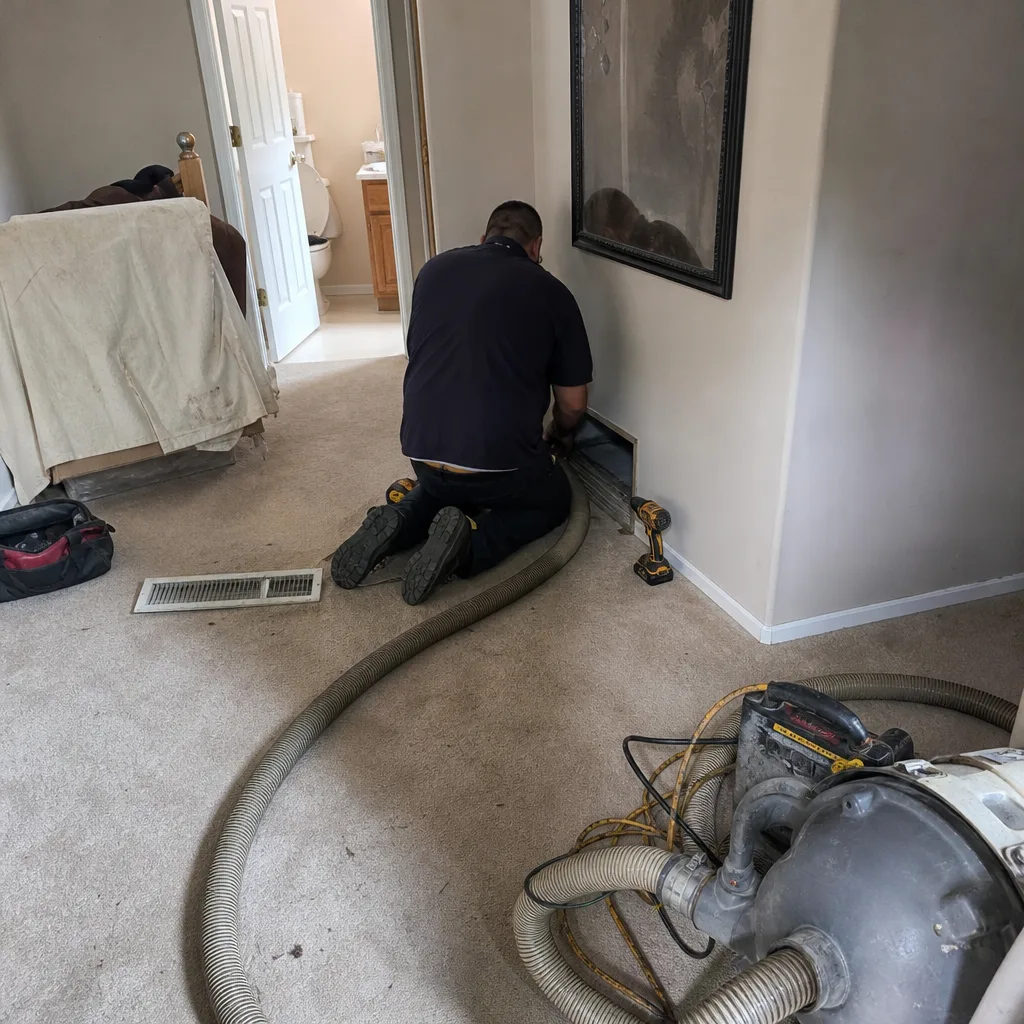 Before
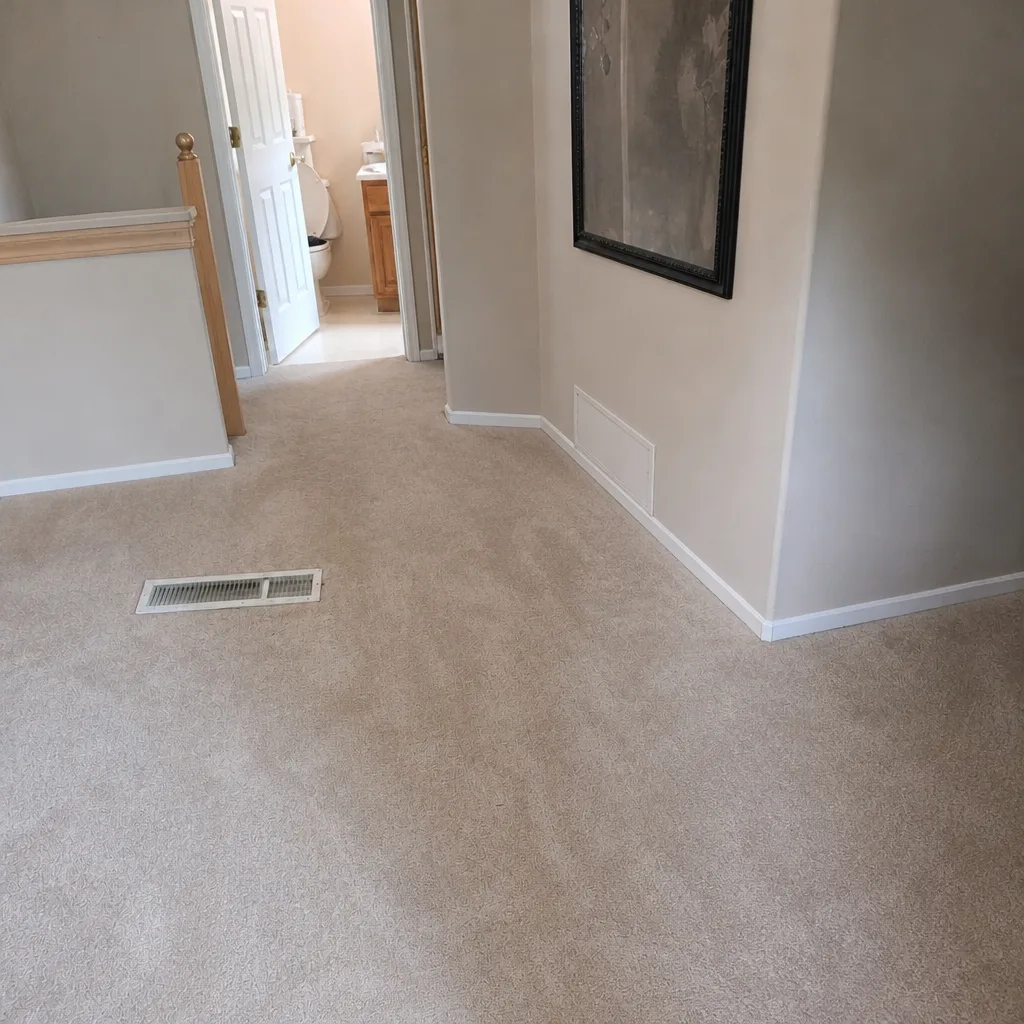 After
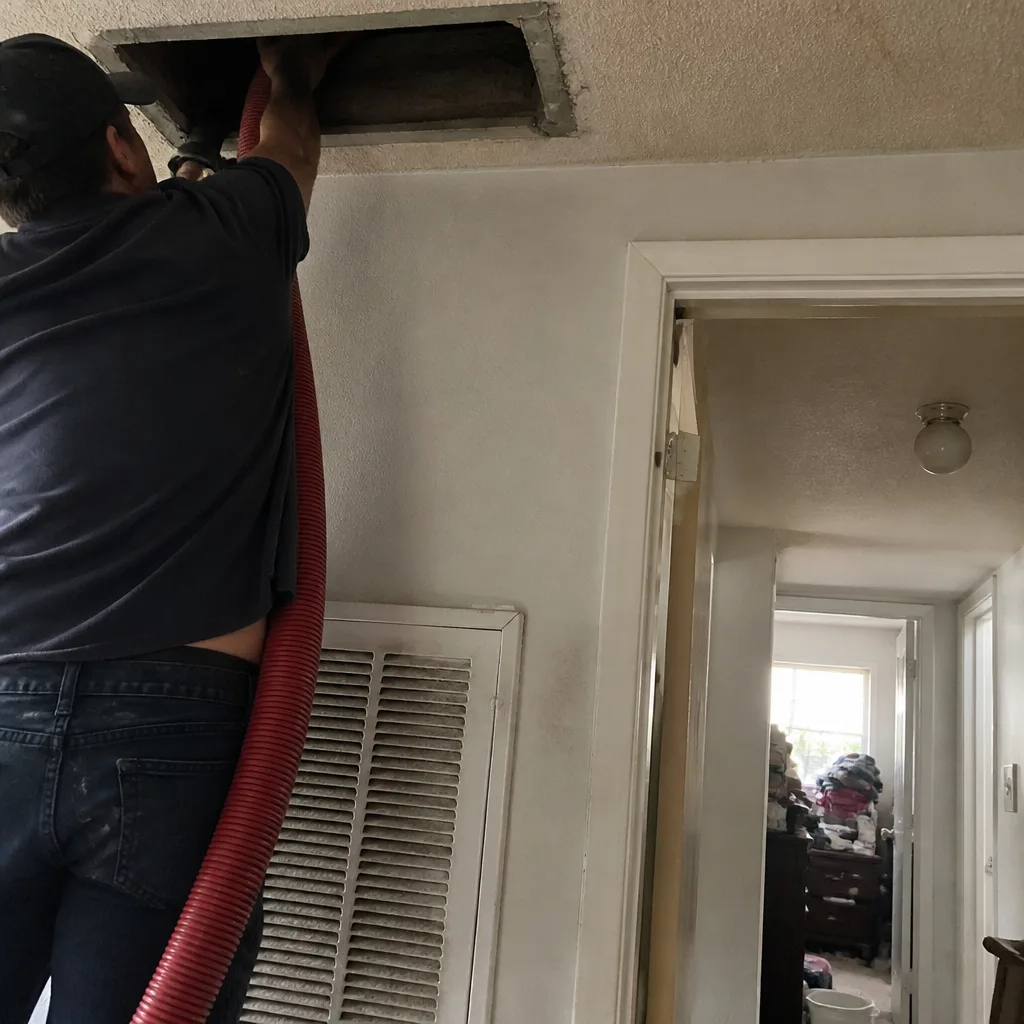 Before
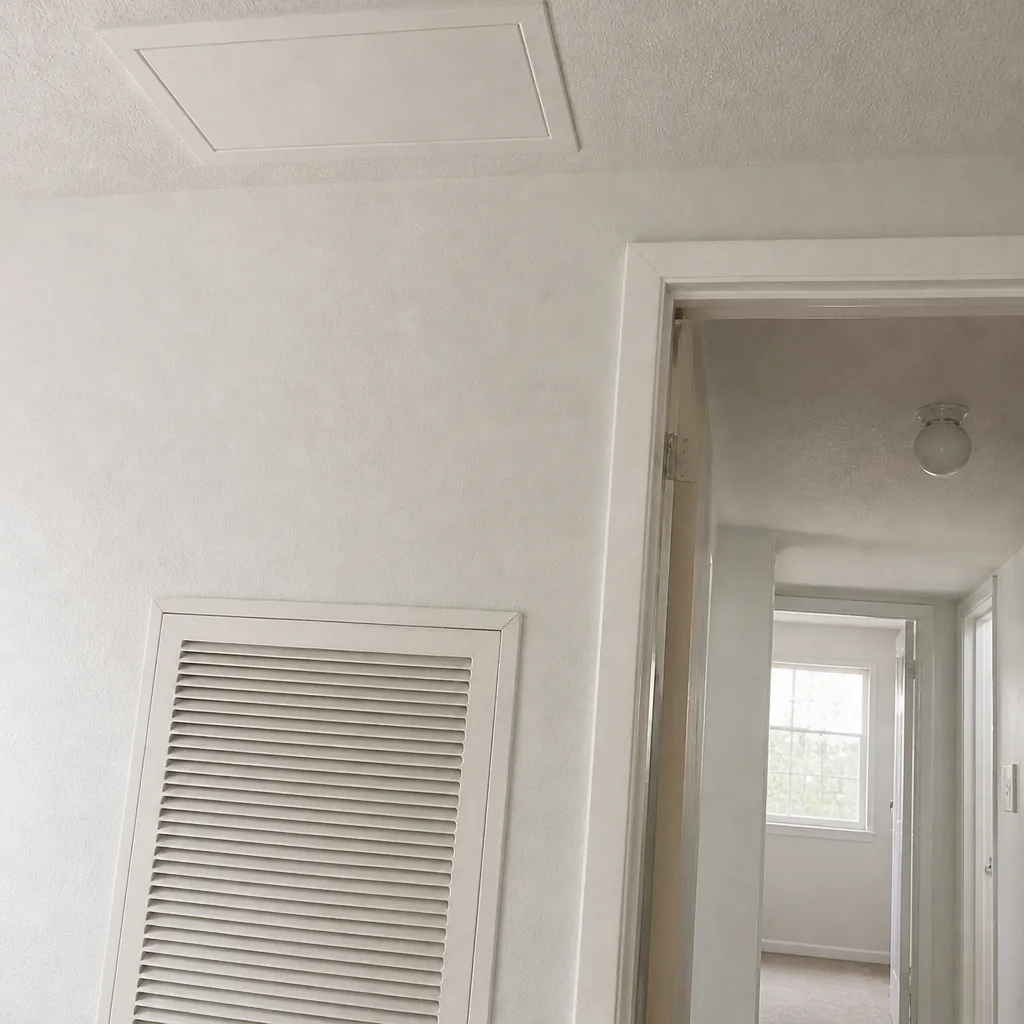 After
Frequently Asked Questions
Air duct cleaning in Centennial typically falls in the range of $350 to $700 for a standard residential system, with larger homes, multi-system setups, or post-emergency jobs with sanitizing running higher. The written estimate you get before work starts is the final price per system, not a teaser that changes on the invoice. Call (877) 820-8053 for an exact quote – estimates are free.
Within 2 to 4 weeks of the smoke clearing, and before the heating season begins if the event was in summer or fall. Smoke particulate bonds to duct surfaces over time, and the sooner it’s removed, the less likely it is to linger through the whole heating season. If the house still smells smoky a week after the outside air cleared, that’s a signal to move sooner.
Because they’re blow-outs, not cleanings. A cheap quote usually means compressed air, no mechanical brushes, no HEPA vacuum, and a price that expands once the technician is on site. Ask what specific equipment is used, and ask for a flat per-system price in writing. That one question filters out most of the low-cost operators in the Centennial market.
Before-and-after photos of your own duct runs, taken by the technician during the job. Any contractor who doesn’t offer that as a standard deliverable is asking you to take it on faith. We provide photos on every job, and the price is set per system before work starts.
Every 3 to 5 years for most homes under normal conditions. After a smoke event, a flood, a remodel, or the introduction of a new pet or family member with allergies, that schedule moves up. In a wildfire smoke corridor like Centennial’s, homes that have been through two or more smoke events in a year often benefit from cleaning more often than the calendar suggests.
Yes, if it’s done within the 48-hour window after the ducts dry out and it includes sanitizing with an air scrubber system. Once mold has colonized duct liner, cleaning alone doesn’t fix it; the liner has to be removed and replaced. That’s why the timing matters more than the cleaning itself. Call (877) 820-8053 the moment the ducts are dry.
MERV 13 is the practical answer for most Centennial homes, with the caveat that the furnace has to be rated for the pressure drop. If you want deeper filtration without airflow problems, a filter cabinet that accepts a 4-inch or 5-inch pleated filter does the job better than stacking a 1-inch MERV 13 in a slot designed for a cheaper filter. For whole-home filtration upgrades, AprilAire and Honeywell systems are what we install.
Yes, in fan-only mode with a MERV 13 filter in place. What you should avoid is the whole-house fan, cooktop exhaust, and bathroom exhaust fans, because each one runs negative pressure and pulls exterior smoke in. Keep windows and doors closed, and plan to have the system cleaned if smoke lingered indoors for more than a couple of days.
The Bottom Line
Centennial homes have the duct system that matches the emergencies they live with: wildfire smoke, spring snowmelt water intrusion, and the steady churn of remodels in older subdivisions. The pre-emergency prep (sealed returns, MERV 13 filtration, AprilAire or Honeywell IAQ integration) reduces how much contamination enters the system in the first place. The post-emergency response – mechanical brush cleaning with Rotobrush, HEPA capture with Nikro, and Abatement Technologies air scrubbing for the water events – gets out what’s already in there. The 48-hour window after a flood and the 2-to-4-week window after a smoke event are the two timelines that matter most. Plan the contractor call before you need it. Book the free estimate now, not the day after.
Ready to talk about your Centennial home’s duct system, or schedule a pre-emergency walkthrough? Call Centennial Air Duct Cleaning Pros at (877) 820-8053. We answer 24/7. Fast dispatch from 7am to 7pm, Sunday through Friday. Estimates are free, and the price is a flat rate per system agreed before any work starts.
Written by the team at Centennial Air Duct Cleaning Pros.