
Last updated November 23, 2026
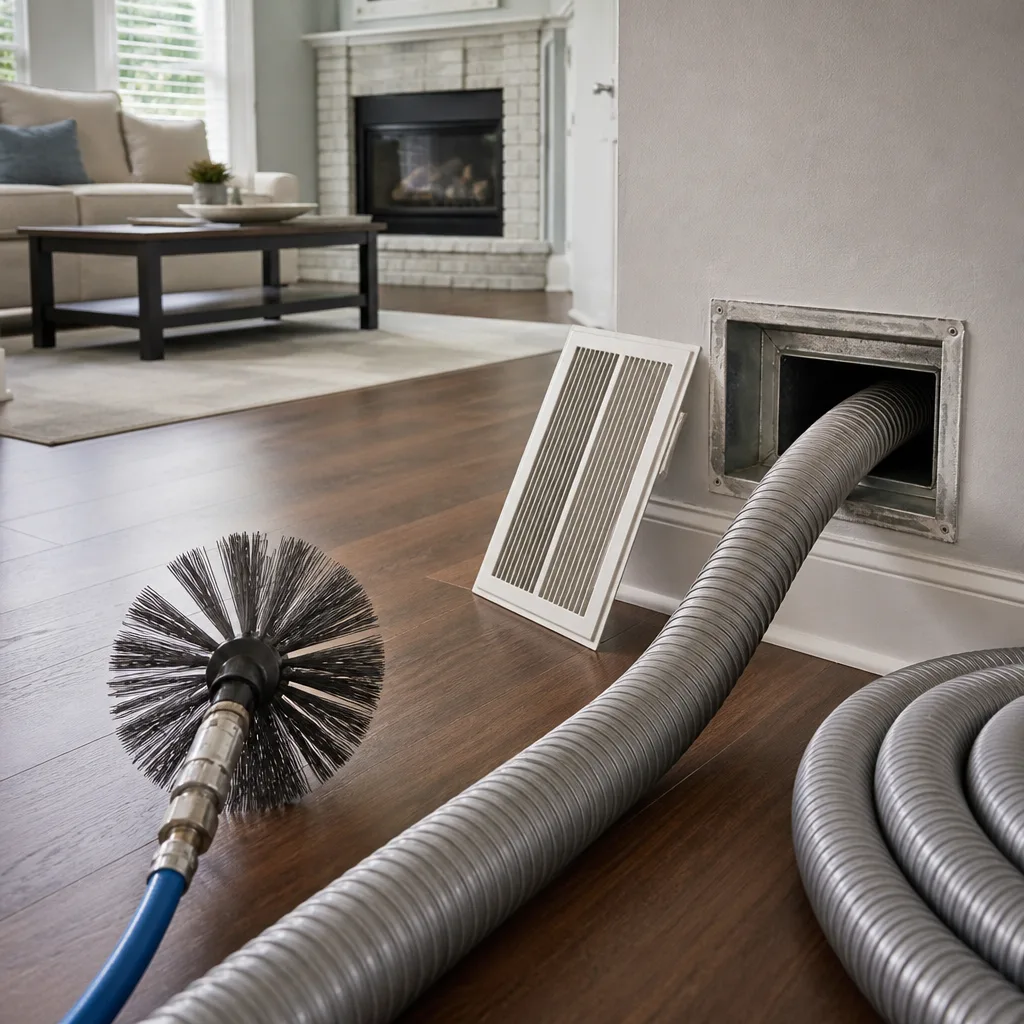 Whole-home duct cleaning
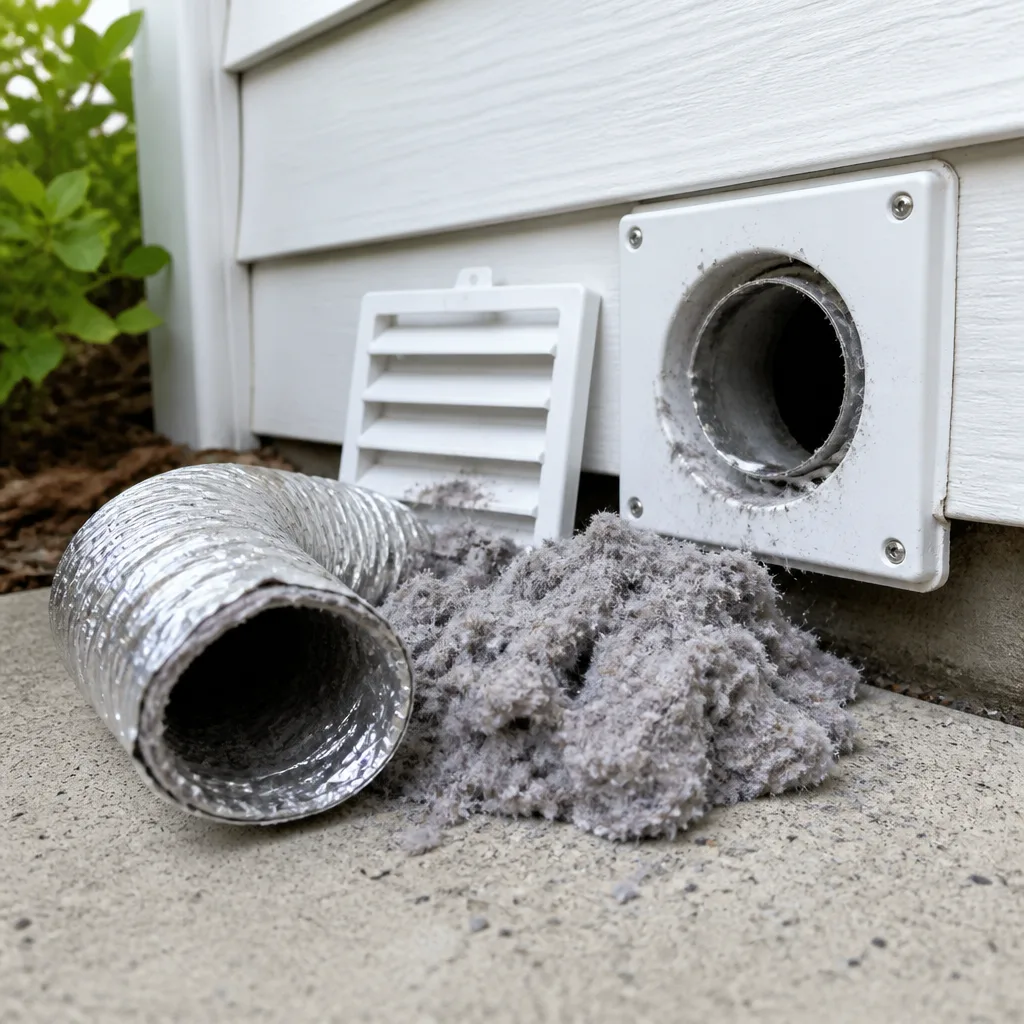 Dryer vent cleaning
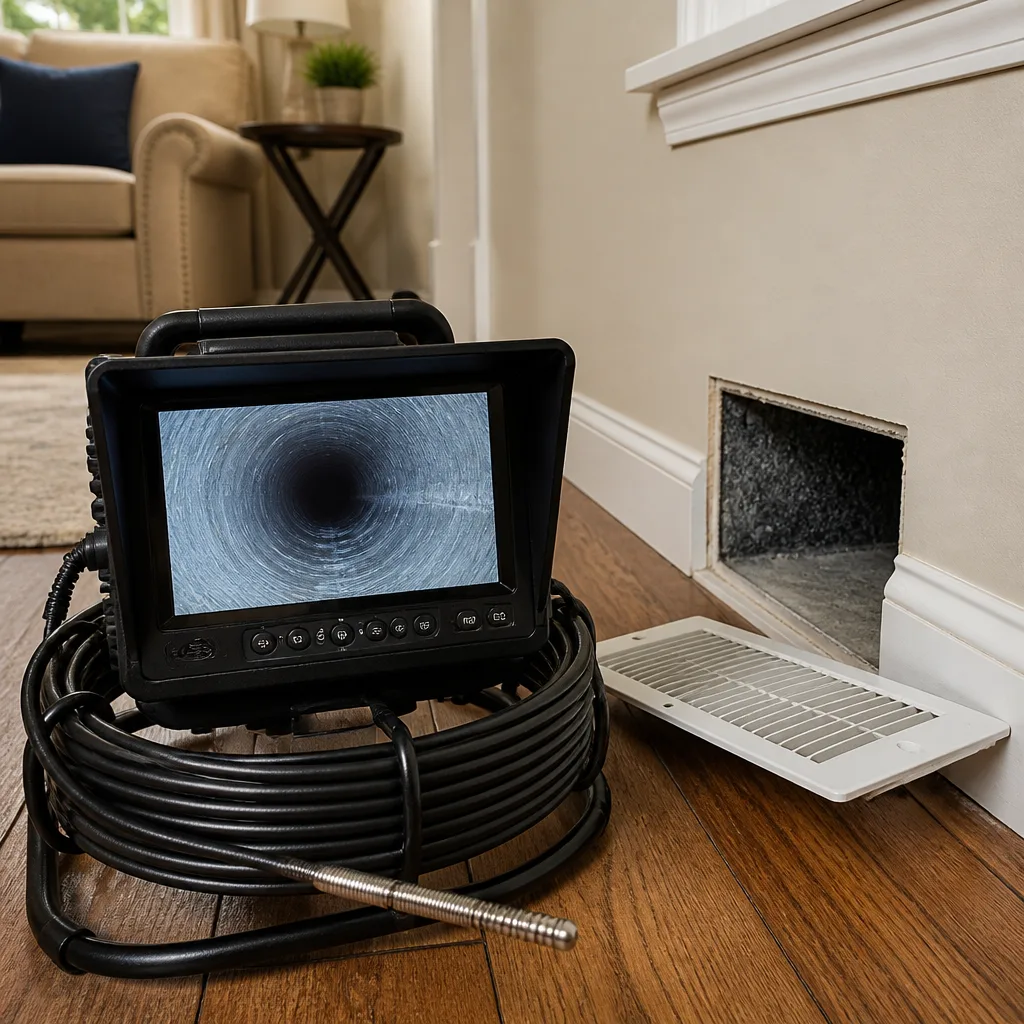 Camera inspection
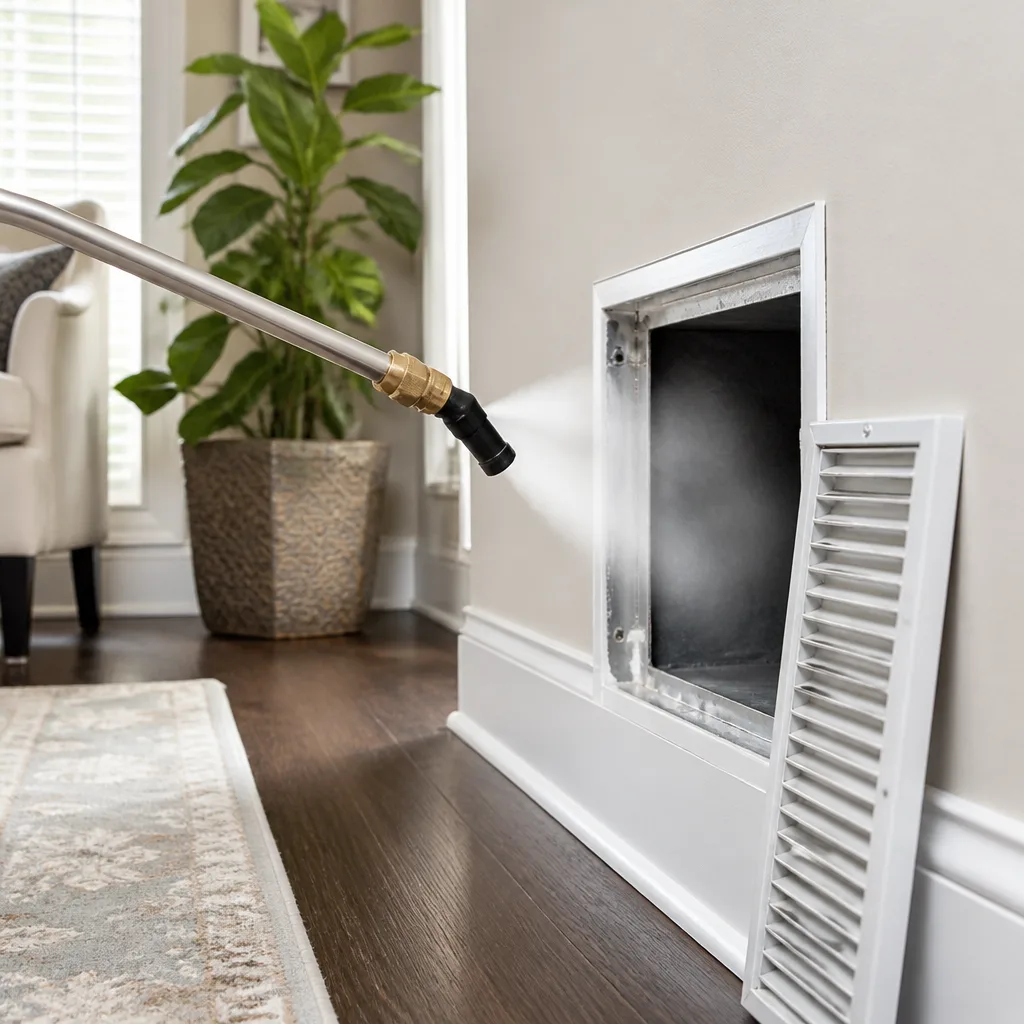 Sanitizing & deodorizing
Whole-system duct and dryer vent check with before-and-after photos - you see exactly what came out of your vents
That "$99 whole-house special" is a bait ad - the real number appears once they are in your hallway, or the "clean" is a shop-vac at the register. We photograph the inside of your ducts before and after instead.
Air Duct Cleaning Troubleshooting in Centennial: Common Problems and How to Fix Them
If one room in your house is always 10 degrees off from the thermostat, your ducts probably aren’t dirty. They’re broken. That’s the single most useful thing to understand before you spend money on duct work in Centennial: the symptom you’re staring at (a cold bedroom, a stuffy office, dust that settles an hour after you wipe it away) usually points to a mechanical failure, not a cleanliness problem. Cleaning a collapsed flex run doesn’t un-collapse it, and vacuuming around a disconnected trunk doesn’t reconnect it. This guide walks you through how to read those symptoms, run a few honest checks yourself, and match each problem to the fix that actually solves it.
Quick Answer
Most air duct problems in Centennial fall into two buckets: a cleaning problem (debris, dust, buildup restricting flow) or a mechanical problem (collapsed flex duct, a disconnected trunk line, failed duct board seams, leaky joints). Cleaning fixes the first. Repair and sealing fix the second. The fast way to tell them apart is a tissue-and-hand airflow test at each register, paired with a look at whether the weak rooms are consistent or random. Call (877) 820-8053 and we’ll help you sort out which one you’re dealing with before you book anything.
Styles & brands we work with
- Whole-home duct cleaning
- Dryer vent cleaning
- Camera inspection
- Sanitizing & deodorizing
Table of Contents
- Symptom-to-Cause Mapping: What Your Ducts Are Telling You
- The Tissue-and-Hand Pressure Check You Can Do Right Now
- Why Centennial’s Temperature Swings Attack Your Duct Board
- Cleaning Problem vs. Sealing Problem: The Distinction That Saves You Money
- Collapsed Flex Duct: The Silent Airflow Killer
- Disconnected Trunk Lines and Failed Seams
- Camera Scope vs. Visual Access Panels: When Each One Is Right
- When the Ducts Are Fine and the Problem Is Somewhere Else
Symptom-to-Cause Mapping: What Your Ducts Are Telling You
Start with what you’re actually experiencing, then work backward. Different symptoms point to different failures, and mixing them up is how homeowners end up paying for the wrong service.
- Weak airflow in one or two rooms, strong everywhere else: almost always a mechanical restriction on that branch. Collapsed flex, a crushed run behind drywall, a damper stuck closed, or a disconnected joint feeding that room. Cleaning won’t fix it.
- Weak airflow in every room, gradually worse over months: this looks more like a dirty system. A clogged evaporator coil, a filter that hasn’t been changed, or heavy buildup in the trunk can choke the whole system. Cleaning is the right call here.
- Dust that settles fast after cleaning, plus visible streaks near registers: leaky joints and unsealed seams pulling attic or crawlspace air into the supply side. Sealing, not vacuuming, is the fix.
- Musty smell that gets stronger when the air kicks on: moisture in the system, often from a duct run that’s sweating in summer or pulling humid air from an unconditioned space.
- Rattle or whoosh at startup, then quiet: a partially closed damper, loose flex, or an undersized return. Mechanical diagnosis needed.
- Temperature that swings wildly room to room: the classic signature of a broken distribution system, not a dirty one.
In Centennial, the older neighborhoods of Willow Creek and the homes near the Cherry Creek corridor give us a lot of the second and third items on that list – original flex runs that have been in the same walls since long before anyone thought about sealing them, and started to sag, kink, or pull loose at the boot. That’s not dirt. That’s a broken airway.
Read the symptom honestly before you schedule. If the whole house feels restricted, you likely need a cleaning. If one room does, you likely need a repair. That single distinction is worth more than any coupon.
The Tissue-and-Hand Pressure Check You Can Do Right Now
You can get a rough but genuinely useful read on your duct pressure with nothing but a tissue and your hand, and it takes about five minutes. Here’s the sequence.
- Turn the system to fan-only (or cooling, whichever runs the blower) and let it stabilize for a couple of minutes.
- Hold a single-ply tissue against each supply register about an inch away. Note whether it flutters, blows out firmly, or barely moves.
- Rank the registers from strongest to weakest. The pattern matters far more than the absolute strength.
- Hold your hand over each return grille. You should feel a steady, strong pull. Weak return pull suggests a restricted return path, not a supply problem.
- Note which rooms are consistently weak over several days, and whether the weakness changes with outside temperature.
Now interpret the pattern. If the same one or two rooms are always weak, the problem is local to that branch: collapsed flex, a crushed run, a closed damper, or a disconnected boot. If every register is weak, that’s a system-wide restriction and it points toward a dirty coil, a clogged filter, blocked return, or heavy buildup. If a register is strong sometimes and weak other times, you’re probably looking at a damper issue or a blower/control problem rather than a duct problem at all.
This test won’t tell you exactly what’s wrong. What it does is tell you whether to book a cleaning, a repair, or a diagnostic. In our experience, that’s the difference between a job that solves the problem and one that just moves the dust around. If your results are ambiguous, that’s the right moment to bring in a trained technician with the equipment to confirm.
Why Centennial’s Temperature Swings Attack Your Duct Board
Centennial sits on the edge of the plains, and that geography produces daily temperature swings of 40 degrees or more in spring and fall. You’ll see a warm afternoon followed by a cold night, then back to warm, all within a week, dozens of times a year. Your ductwork lives through every one of those cycles.
Here’s what the material does. Duct board, the rigid fiberglass board used in many attic and basement trunk lines, is glued and taped at its seams. That adhesive and tape expand with heat and contract with cold. Repeat that thousands of times over years and the seams start to lift. Once a seam lifts, you get two problems at once: air leaks out of the trunk into the attic or crawlspace (so it never reaches your rooms), and attic or crawlspace air leaks into the trunk (so dust, insulation fibers, and humidity get pulled into your supply air).
Delamination looks a certain way when we open things up. You’ll see:
- Lifted edges along the long seams of duct board trunk lines, often with the tape curled or dried out
- Fiberglass fibers visible at the joint where two boards meet
- Crumbling mastic (the grey paste used to seal joints) that flakes away when touched
- Black dust or dark streaks on the outside of duct board, marking where air has been leaking for a while
- Cooling or heating loss in specific rooms that’s worse in transition months (March-April, October-November) when the swings are largest
This is why we recommend a full duct system check on any Centennial home with a duct board trunk, especially older builds. What cleaning addresses is dirt. What these swings create is seam failure, and the fix for that is sealing, not vacuuming. The right equipment matters here: sealing a delaminated trunk properly (mastic, mesh, or a professional-grade duct sealing process) closes the leak at the source. We reach for contractor-grade tools because a cheap tape-and-go seal will fail again on the next cold snap.
Cleaning Problem vs. Sealing Problem: The Distinction That Saves You Money
Most homeowners call for a cleaning when they’re actually describing a sealing problem. The two are easy to confuse because both produce visible symptoms – dust, weak airflow, uneven temperature. They’re fixed by completely different processes, and paying for the wrong one wastes your money.
Cleaning is the right service when:
- Dust and debris are the primary complaint, and the whole system feels restricted
- The ductwork has not been professionally cleaned and there’s visible buildup at the registers
- You just moved in and want a known baseline before you trust the air quality
- Renovation work has been done and construction dust has gotten into the system
Sealing is the right service when:
- You can feel air moving out of joints, or see dark streaks at seams
- Airflow is weak in a specific pattern that repeats day after day
- Some rooms are always hot or cold while others are fine
- You smell attic or crawlspace air coming from registers
- You’ve just had a cleaning and the symptoms returned within a few weeks
The mechanical part of sealing is worth understanding. Sealing with mastic and mesh is done from the outside of the duct – you physically access the joint and close it. Sealing with an aerosol-based duct sealing process (like Aeroseal) is done from the inside, sealing pinholes and small joints throughout the system without opening walls. Both have a place; neither is the same as cleaning. Cleaning removes what’s inside. Sealing closes what’s leaking. A professional who carries only a vacuum will always recommend cleaning; a professional who carries the full kit can tell you which one your ducts actually need. That full scope – cleaning, repair, sealing – is what we mean by the full duct system, and it’s the reason we run Rotobrush brushes and Nikro HEPA extraction on the cleaning side, then finish with sealing where the joints need attention.
After cleaning and sealing, air quality equipment matters. We work with Aprilaire and Honeywell indoor air quality products so the system can hold its improvement long after we drive off. Clean ducts help. Sealed, filtered ducts help permanently.
Collapsed Flex Duct: The Silent Airflow Killer
Flexible duct is the foil-wrapped, ribbed duct you’ll see snaking between joists in most Centennial homes built in the last thirty years. It’s great for routing. It’s terrible for resilience. Flex collapses easily from kinking, from being stepped on in the attic, from a raccoon finding it in a crawlspace, or from a run that’s had a heavy box stacked on top of it for years.
When flex collapses, the airway narrows to a fraction of its designed size. The blower is still pushing the same air, so the pressure builds up behind the pinch, and that room gets almost nothing. Here’s how to tell collapsed flex from ordinary buildup:
- Isolated weakness. Collapsed flex usually affects one or two registers, not the whole house. If only the master bedroom is cold and everything else is fine, suspect the branch feeding it.
- A whoosh at the plenum. A partially collapsed run often makes an audible whoosh at the branch takeoff because the air is choked downstream.
- Pressure test at the boot. A tissue at the weak register will barely flutter while the strong registers pass the test with force.
- Visual check in the attic. If you can see the run and it’s clearly flattened, kinked at a bend, or crushed against a joist, it’s collapsed.
The fix is to replace the run (not to clean it) – properly re-branched, sized to the register, and supported so it doesn’t collapse again. Flexible duct is not the villain here; poorly supported flexible duct is. A good repair uses rigid takeoff collars, hangers, and the correct bend radius, plus a seal at every joint.
Centennial’s older neighborhoods see a lot of this because service renovations and additions have re-routed duct runs over the years, sometimes with no regard for bend radius or support. If a run was pulled tight around a corner to make room for a water heater or furnace swap, it’s probably collapsed now. A camera inspection can confirm the diagnosis without cutting into drywall – more on that below.
Disconnected Trunk Lines and Failed Seams
Where collapsed flex kills one room, a disconnected trunk line kills several. The trunk is the main supply duct that runs off your furnace or air handler and feeds the branches. When the trunk separates from a branch collar, or when the trunk itself fails at a seam, that air escapes into the attic, crawlspace, or basement rather than into your rooms.
The telltale signs of a disconnected trunk line:
- Several rooms on the same side of the house are simultaneously weak
- You feel air blowing in the attic or basement when the system runs
- Dust streaks on attic insulation or the crawlspace floor beneath the trunk
- The house never quite reaches the set temperature, no matter how long the system runs
- In multi-story Centennial homes, the upstairs is always warmer in summer than the downstairs
This is not a cleaning problem. Cleaning a system with a disconnected trunk just means the vacuum runs while the air leaks out. The fix is reconnecting the collar, re-hanging the trunk, and sealing the joint properly. If the trunk has delaminated duct board, we add mastic and mesh to seal the failed seams at the same time. If the joint is accessible, the repair is often done in a single visit; if it’s behind drywall, a camera inspection confirms the location and scope of the fix first.
One more thing Centennial homeowners ask about: why a “dirty duct” smell sometimes appears when there’s no dirt. Often that’s a disconnected return trunk pulling air from a crawlspace or attic that carries a humidity odor. Fixing the leak fixes the smell. Cleaning the supply side alone won’t. Our HVAC cleaning service covers the full system – air handler, coil, plenum – so the cause of that smell gets addressed, not just the symptom.
Camera Scope vs. Visual Access Panels: When Each One Is Right
A trained technician has two tools for diagnosis, and the right one depends on the situation. Both have a place. Neither is a replacement for the other.
Visual access panels are the right call when:
- The ductwork is accessible – attic, basement, garage, or crawlspace with room to work
- You can see the failed joint, collapsed run, or lifted seam with the naked eye
- The system is small and simple, with few branch runs to trace
- The problem is clearly at the plenum or across the trunk
- You want a fast, low-cost diagnostic to confirm what the tissue test hinted at
A camera scope is the right call when:
- The suspect run is behind drywall or in a chase with no access
- Airflow is weak but everything accessible looks fine, so the problem is hidden
- You’ve had a cleaning and symptoms returned, and you suspect a fractured flex or seam that the vacuum couldn’t see
- You’re buying a Centennial home and want a documented inspection before you commit
- The HVAC system has been re-routed by a prior renovation and you need to trace it
In our experience, the best diagnostic combines both. A visual pass maps the layout and finds the obvious failures; a camera confirms the inaccessible ones. Then the fix is scoped on the written estimate so you know exactly what’s being repaired and why.
While the technician is in the system, that’s also the right time to run Rotobrush mechanical brushing and Nikro extraction if the ducts are dirty while you’re already inside. Combining cleaning with sealing or repair in one visit saves the disruption of a second appointment, and it’s the practical reason to book a full-system service rather than a cleaning alone.
When the Ducts Are Fine and the Problem Is Somewhere Else
Not every comfort problem lives in the ductwork. Before you spend money sealing the ducts, rule out these adjacent issues:
- The filter. A dirty filter restricts the whole system. Change it before you run any other test.
- The blower and evaporator coil. A dirty coil can choke a system the same way a collapsed duct can. Real inspection here is legitimate; a technician should confirm.
- The return path. Undersized returns cause high static pressure and weak supply airflow everywhere. This is a system design issue, not a duct cleaning issue.
- Insulation and envelope. If a room is hot because it’s poorly insulated or the windows are single-pane, duct cleaning and sealing won’t fix it. It’ll reduce the heat loss, but not eliminate it.
- The thermostat. Bad placement, bad calibration, or a failing sensor can produce temperature swings that read as duct problems.
- The dryer vent. This isn’t comfort-related, but it’s a safety issue that belongs in any full-system inspection. Lint buildup in a dryer vent is a leading cause of residential fires and most air-duct-only providers skip it entirely. Our dryer vent cleaning covers it directly.
When you call for a diagnostic, ask what the technician will actually check beyond the ducts. A serious inspection covers the whole system: the blower, the coil, the plenum, the returns, and the supply runs. That’s why we treat the full duct system as the unit of work – every component of your duct work, and the equipment attached to it, gets looked at together. If you want the starting point before deciding on a repair, our air duct cleaning service is the natural first appointment; the technician can advise from there whether a repair or seal is needed.
Common Mistakes to Avoid
- Buying a cleaning when you need a repair. If only one room is weak, cleaning won’t fix it. Read the symptom map first.
- Buying a repair when you need a cleaning. System-wide restriction with no leaks is a cleaning problem. Sealing won’t fix it.
- Paying for a single low coupon price and then getting an upcharge on site. The honest fix is a per-job written estimate before work starts, no per-vent pricing, and before-and-after photos of your own ducts so you can see what was done.
- Skipping the dryer vent. In Centennial, as elsewhere, this is a fire-risk reduction service most air-duct-only companies never mention. Get it checked.
- Trusting a truck-mounted air-only “cleaning.” Compressed air blows dust into the living space unless it’s captured by HEPA extraction. Ask what equipment is on the job before you book.
- Booksampling by price alone. A cleaning with no documentation, no photos, and no reveal of what was actually brushed is a guess, not a job.
- Ignoring temperature swings. Centennial’s 40-degree spring and fall swings genuinely accelerate duct board delamination. If you see lifted seams, address them now, before the next heating season opens them further.
See the difference
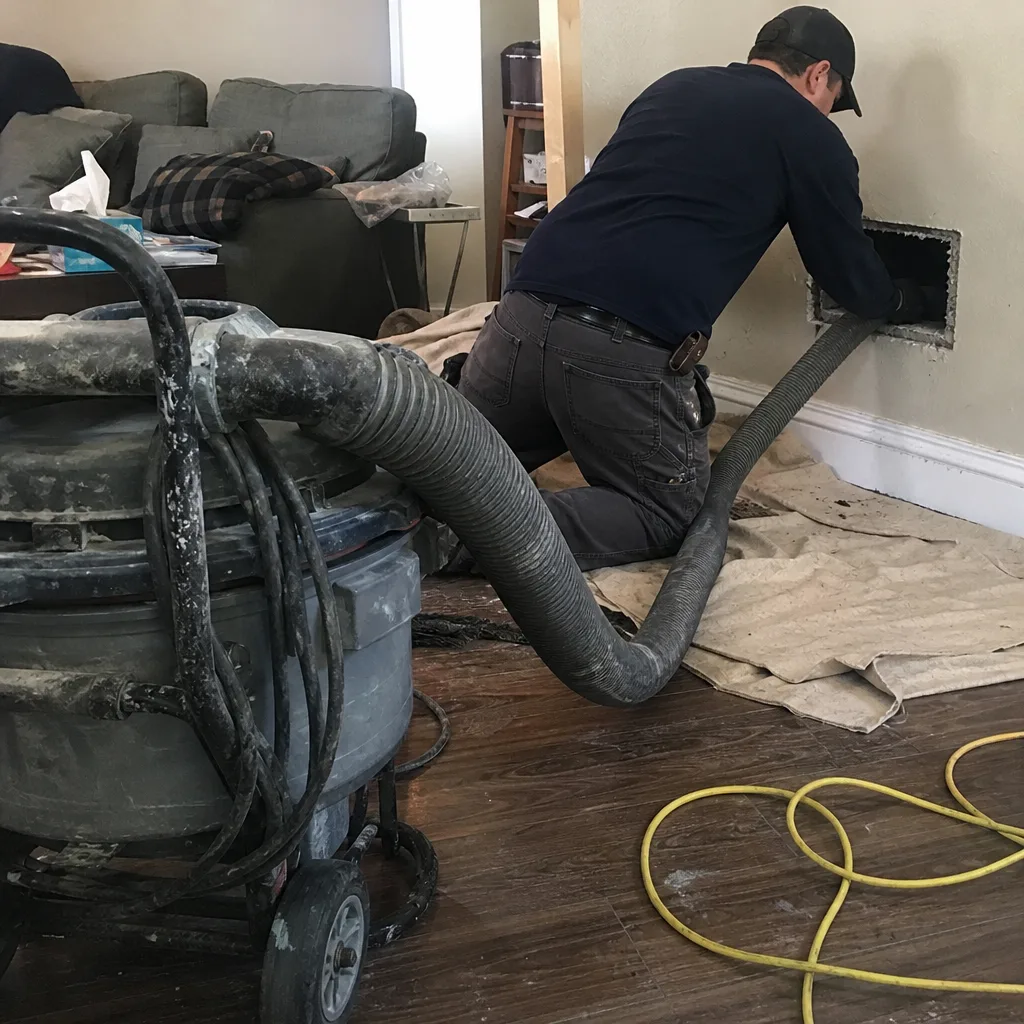 Before
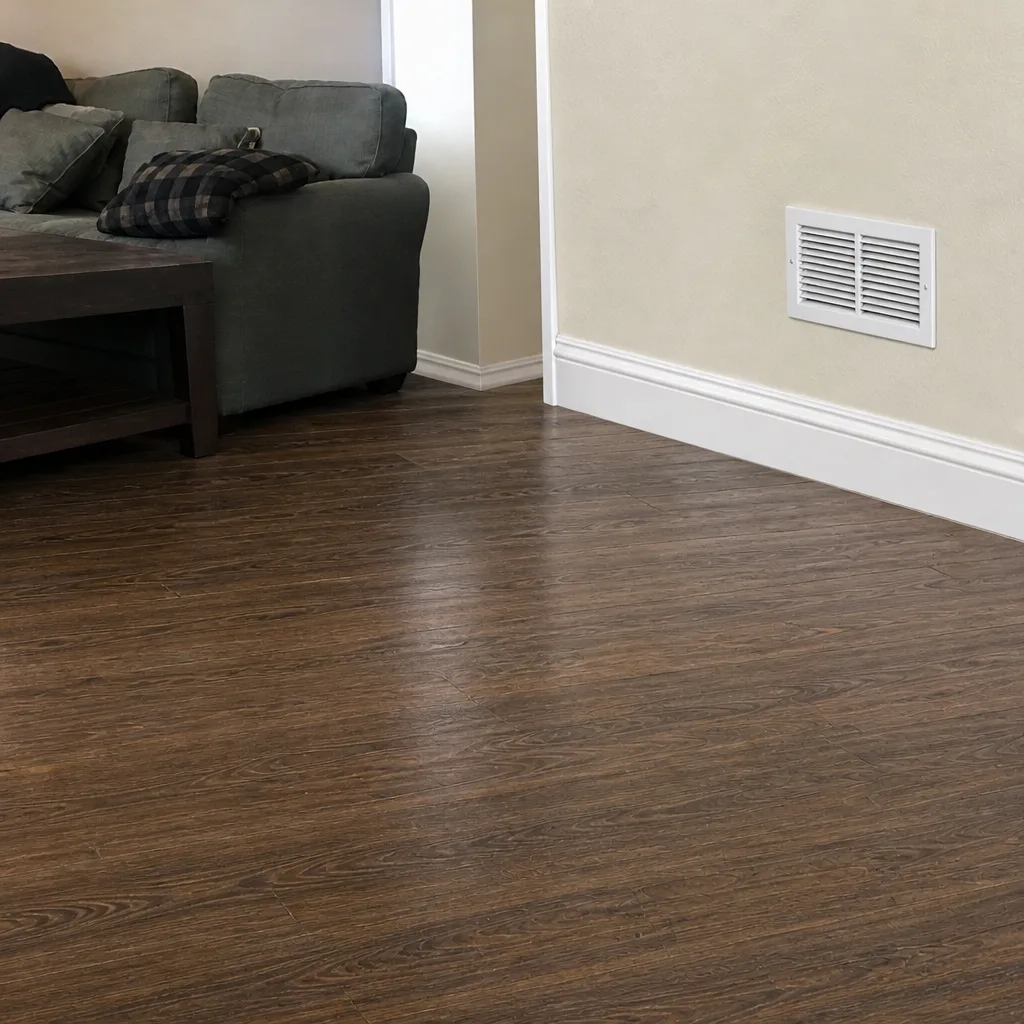 After
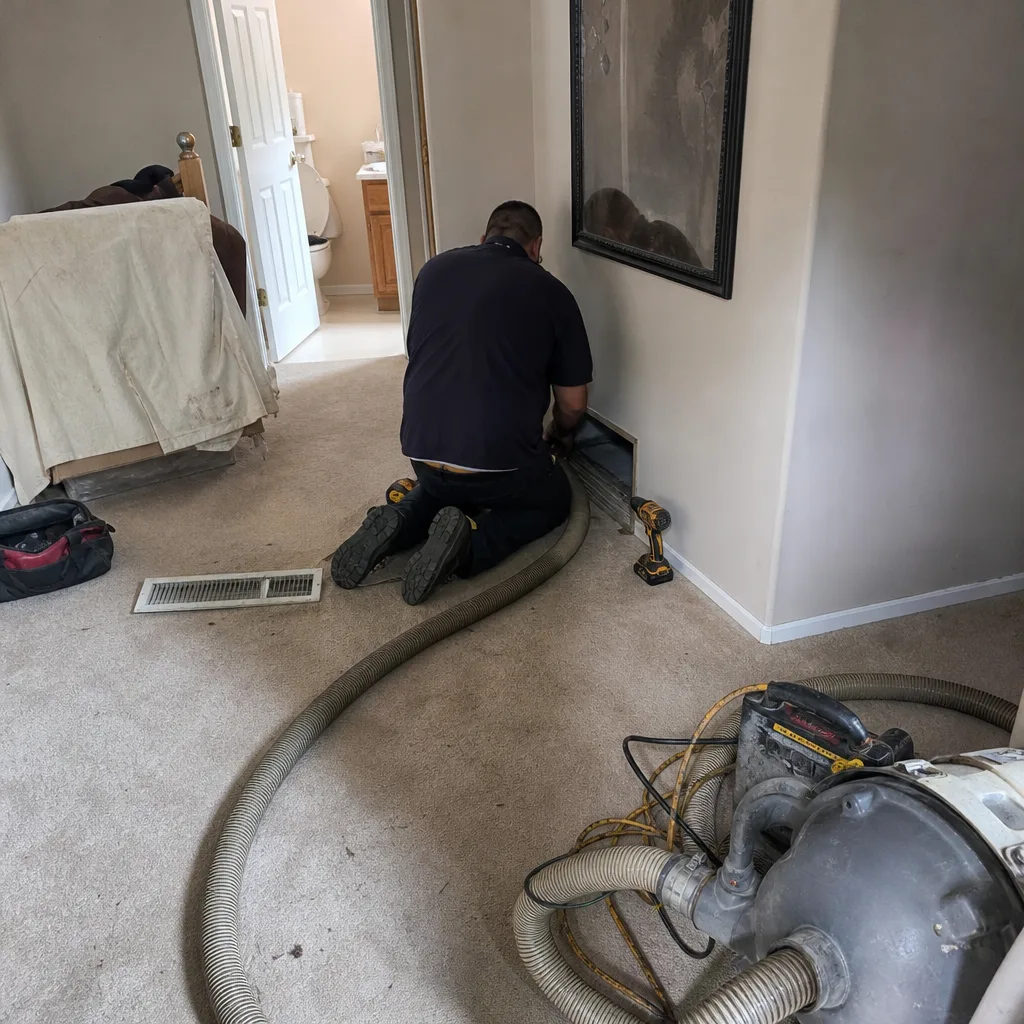 Before
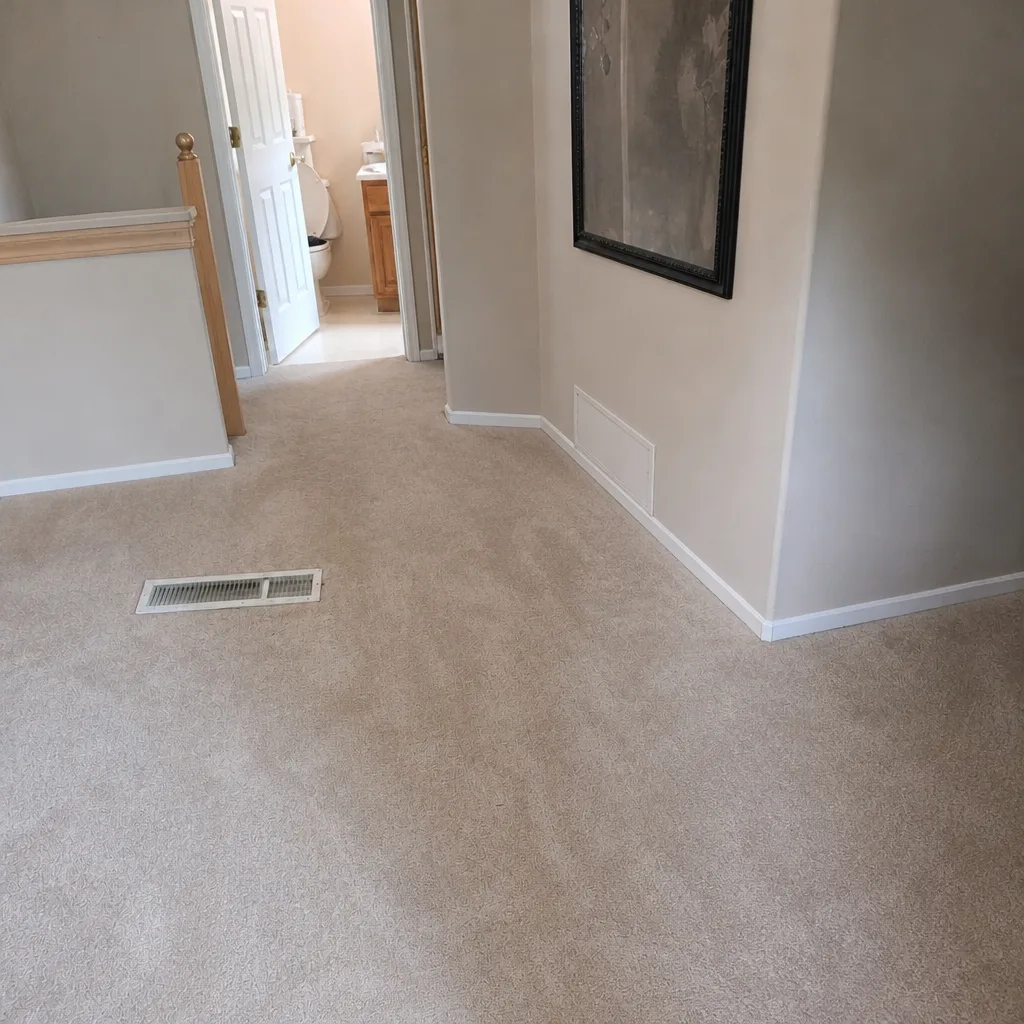 After
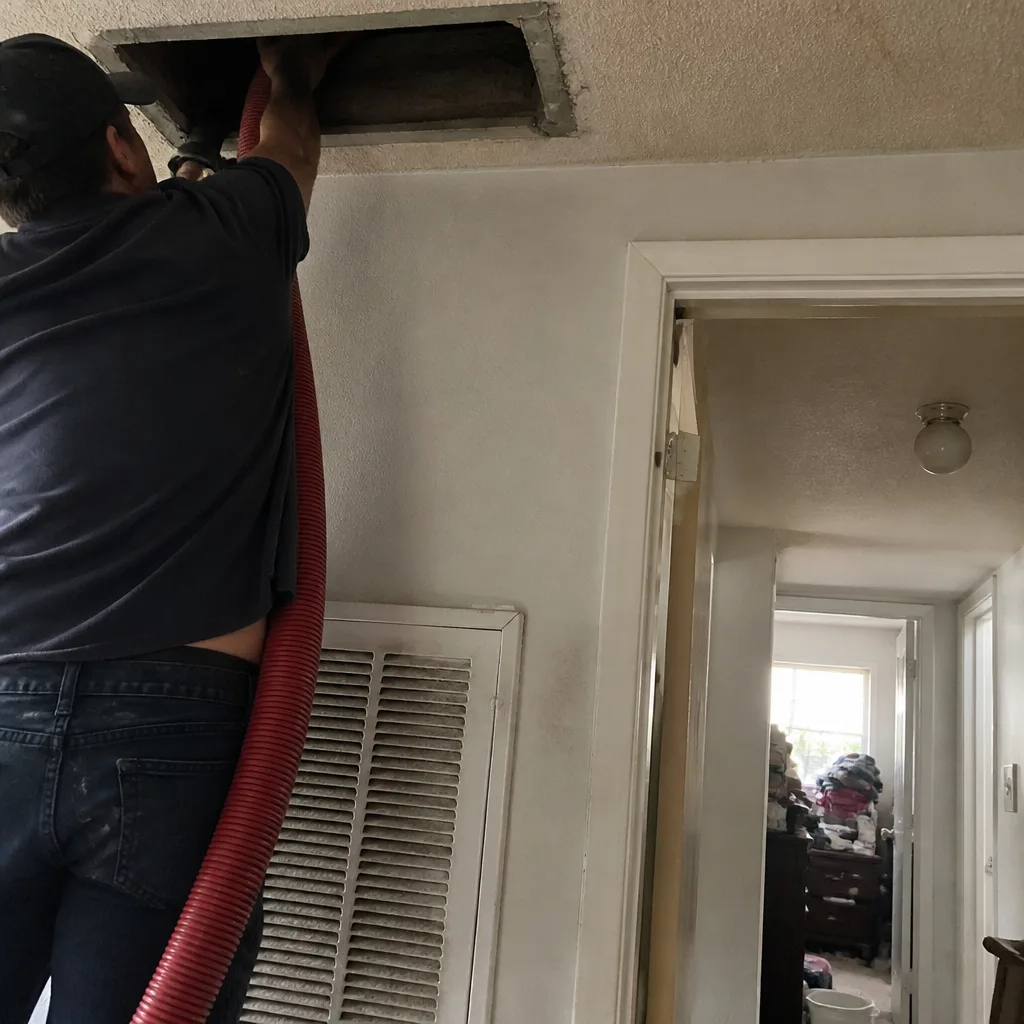 Before
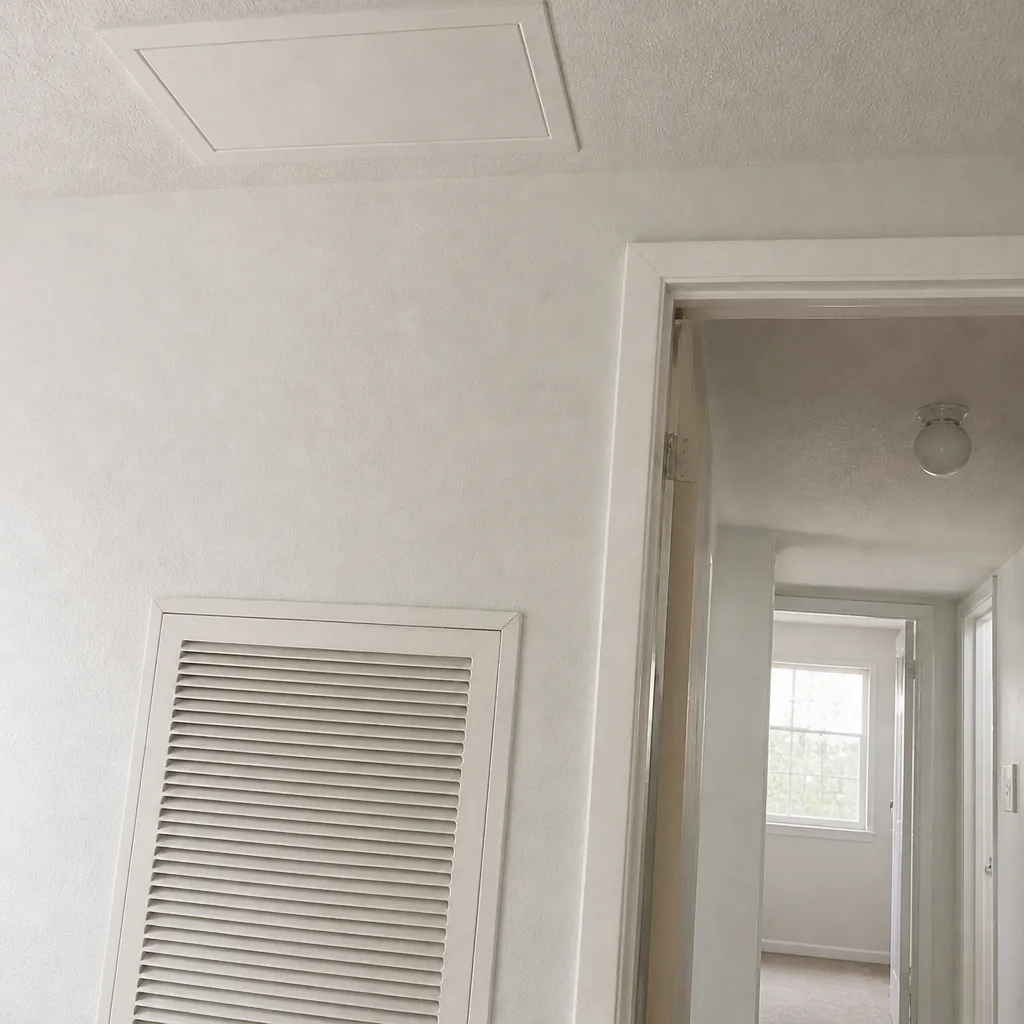 After
When to Call a Professional
Call a professional when the tissue-and-hand test shows a consistent, repeatable pattern you can’t explain, when symptoms come back within weeks of a cleaning, when the whole system feels restricted, or when you see duct board seams lifting, dark streaks at joints, or disconnected runs in an accessible space. Call also if you’re a new Centennial homeowner with no service history, a parent concerned about air quality in a home with young children, or a property manager whose tenants report repeated comfort complaints. Those are the situations where a proper inspection and written scope save real money against trial-and-error.
Centennial Air Duct Cleaning Pros offers free estimates in Centennial – call (877) 820-8053. We answer 24/7. Fast dispatch from 7am to 7pm, Sunday through Friday. Our technicians have up to 13 years of experience, and the local pro is licensed and insured as their state requires. One flat price per system is agreed before work starts, and before-and-after photos of your own ducts document the work.
Frequently Asked Questions
Prices depend on how many systems, how accessible the ductwork is, and whether any repairs or sealing are included. The estimate is free, set per job, and confirmed in writing before any work starts. Cheap coupons that triple on-site are the bait-and-switch problem in this trade, and the way to avoid it is one flat price per system, not per-vent pricing. Call (877) 820-8053 for an exact quote – estimates are free.
Usually because the quote is for a compressed-air “blow-out” rather than a mechanical cleaning – air only, no brush contact, no HEPA extraction, and no documented proof that the work was actually done. Sometimes it’s a per-vent price that inflates quickly on site. Ask what equipment the technician will bring, whether you’ll get before-and-after photos, and whether the price is flat per system. Call (877) 820-8053 for an honest quote.
You should see before-and-after photos of your own ducts, not stock images. A serious job includes mechanical brush contact (Rotobrush on every job), HEPA-rated capture (Nikro) so the dislodged debris doesn’t end up in your living room, and a walkthrough of the system when the technician is finished. If those aren’t offered, that’s your signal. Call (877) 820-8053 to book a documented job.
It depends on the home. Most Centennial households do well with a professional cleaning every few years, replacing filters regularly, and doing a full-system check after any renovation, move-in, or new furnace installation. Homes with pets, allergy sufferers, or heavy pollen loads may want it sooner. Your first cleaning establishes a baseline; the technician can advise on your specific interval. Call (877) 820-8053 to schedule an estimate.
Often, yes – if the run is accessible in the attic, basement, crawlspace, or garage. Hidden runs behind drywall may need a camera scope first, then a scheduled repair. The technician will confirm the scope from the written estimate before any work begins. Call (877) 820-8053 and we’ll help you figure out what’s likely.
We handle the whole system: air duct cleaning, HVAC cleaning, duct repair, duct sealing, air quality sanitizing, and dedicated dryer vent cleaning. Dryer vent safety is a fire-risk reduction service most air-duct-only companies skip, and it’s worth having checked on any full-system service. Call (877) 820-8053 to include it in your estimate.
The Bottom Line
If one room is always off while the rest of the house is comfortable, your ducts are probably broken, not dirty. That’s the difference between a cleaning job and a repair-and-sealing job, and it’s the most important thing to get right before you book anyone. Run the tissue-and-hand test. Read the pattern honestly. Check for lifted duct board seams after Centennial’s spring and fall swings. If you see a failed seam, a collapsed run, or a disconnected trunk, a vacuum is the wrong tool – repair and sealing are. And if the symptom points to a whole-system restriction, a documented cleaning with mechanical brushes and HEPA extraction is the right call. Call (877) 820-8053 for a free estimate. We answer 24/7. Fast dispatch from 7am to 7pm, Sunday through Friday. Start with a diagnostic, not a guess.
Written by the team at Centennial Air Duct Cleaning Pros.