
Last updated November 23, 2026
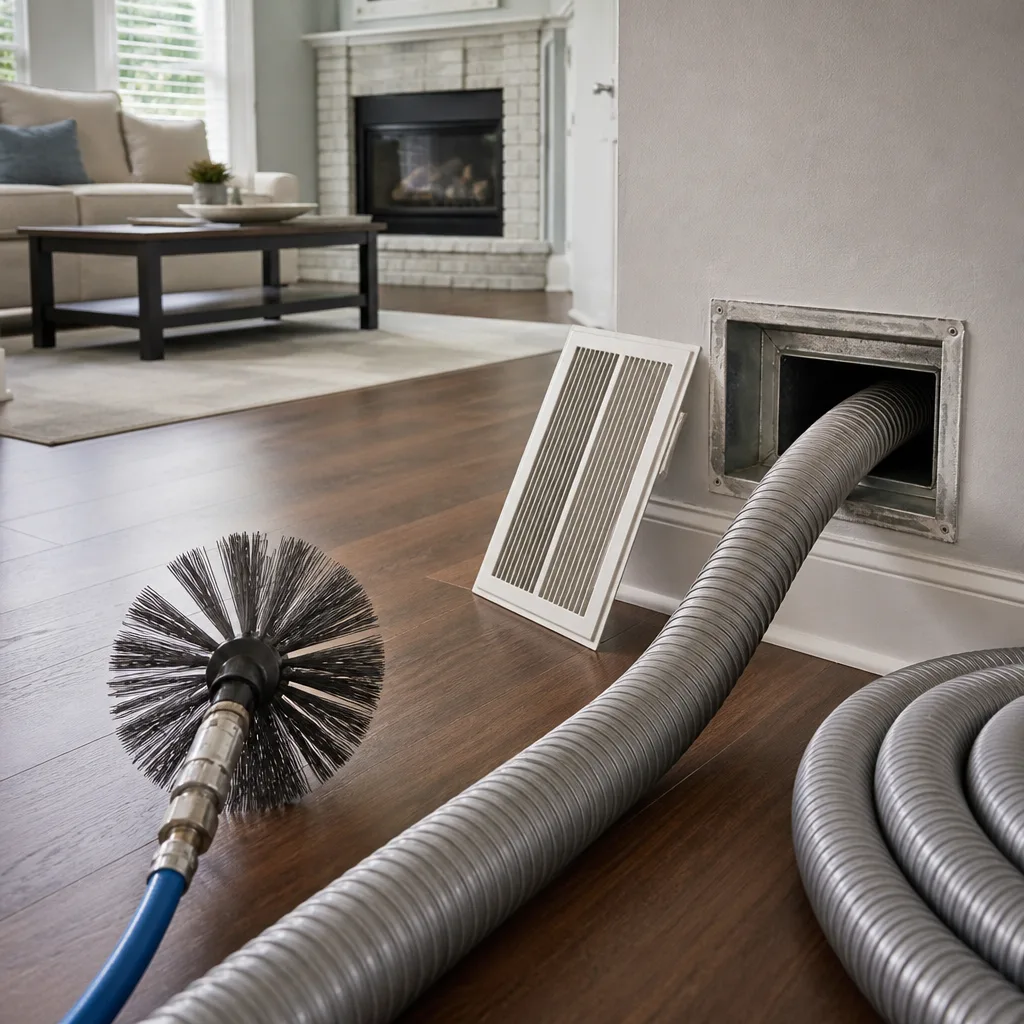 Whole-home duct cleaning
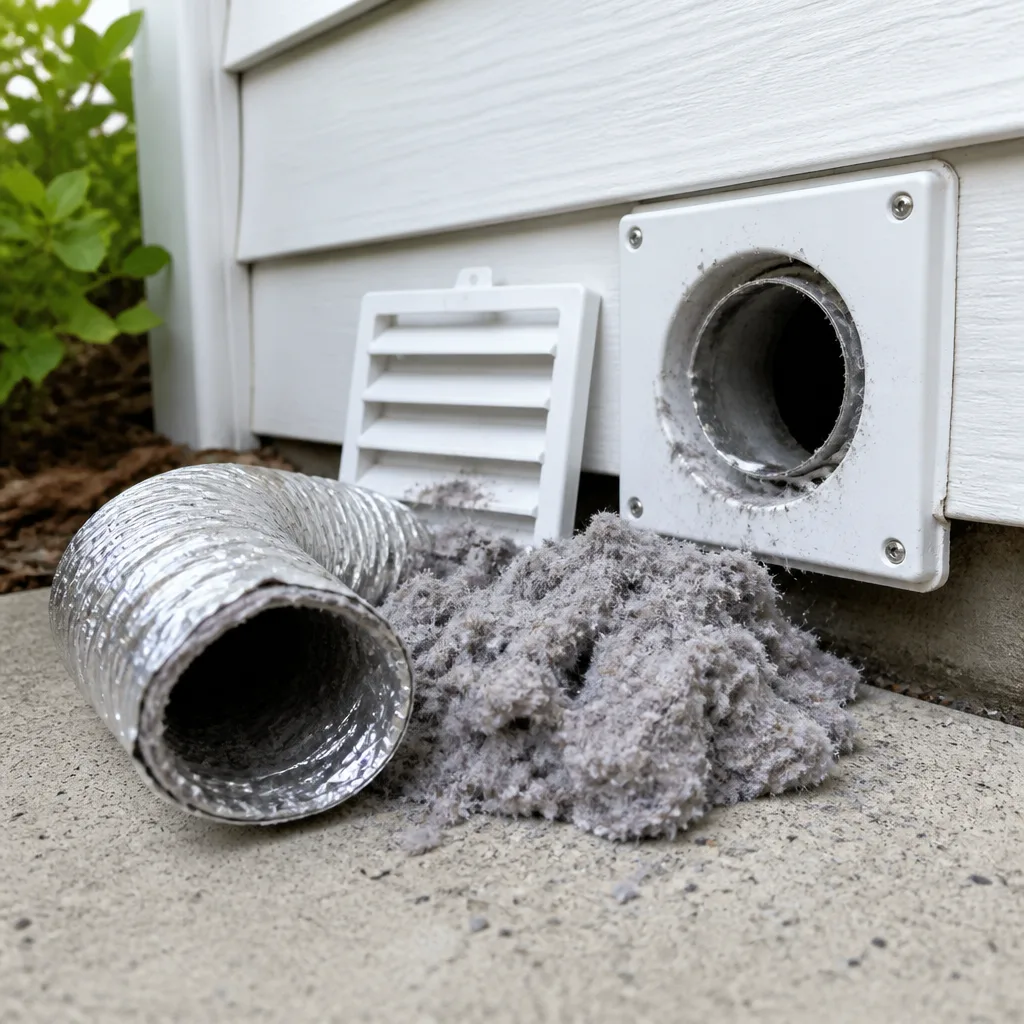 Dryer vent cleaning
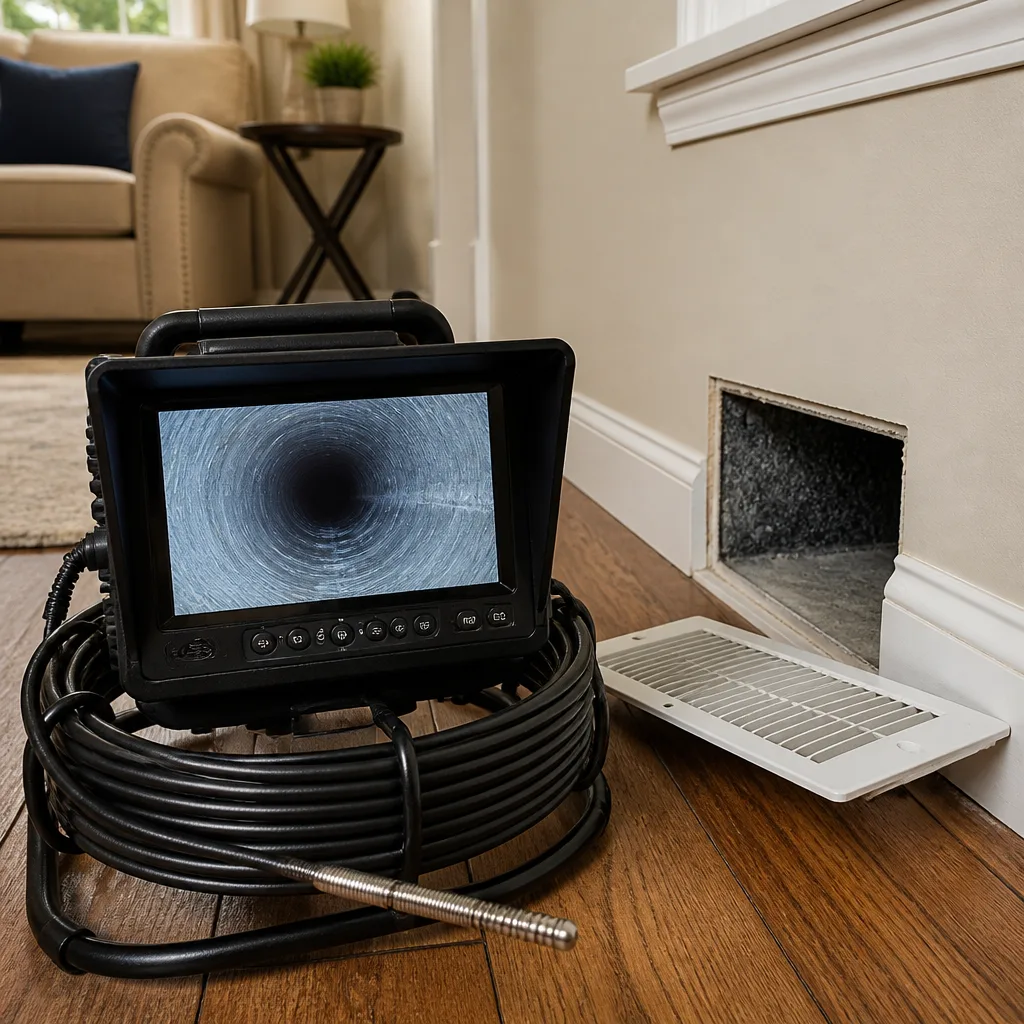 Camera inspection
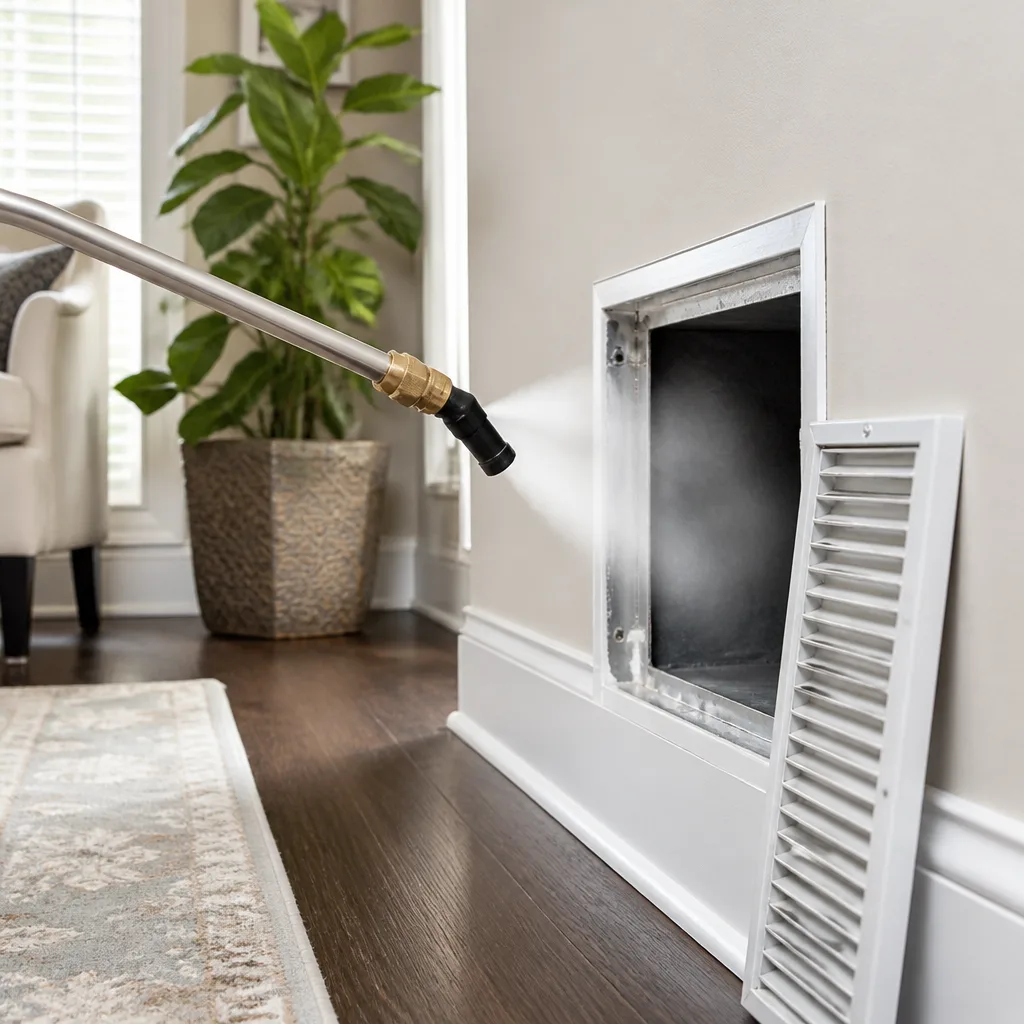 Sanitizing & deodorizing
Whole-system duct and dryer vent check with before-and-after photos - you see exactly what came out of your vents
That "$99 whole-house special" is a bait ad - the real number appears once they are in your hallway, or the "clean" is a shop-vac at the register. We photograph the inside of your ducts before and after instead.
Air Duct Cleaning Warning Signs: A Centennial Homeowner’s Reference Guide
If you’re dusting surfaces two to three times more frequently than you did two years ago and nothing else changed, your duct system is the most likely source, not your cleaning habits. That’s the uncomfortable part about duct problems: they don’t announce themselves. They accumulate. A little less airflow in the back bedroom, a faint smell at one register, a new streak of dust on the ceiling near a vent. Most Centennial homeowners blame the furnace, the thermostat, or a drafty window, and keep living with it. This guide is a symptom-to-cause index for the Centennial homeowner who wants to diagnose what’s actually happening inside their duct work before they spend money on the wrong fix.
Quick Answer
The most reliable warning signs that air ducts need professional attention are: visible dust or debris blowing out of supply registers, rooms that stay too hot or cold no matter what the thermostat says, musty or metallic odors concentrated at specific vents, and a visible dust buildup on the inside walls of registers. If you can see debris coating the inside of your duct work through a register or return, that’s past a filter problem. If a room’s airflow has been weak for months and cleaning the filter didn’t help, that’s past a furnace problem. Centennial’s dry high-desert climate makes dust and debris accumulation predictable, so the symptoms are usually easy to spot once you know what to look for.
Styles & brands we work with
- Whole-home duct cleaning
- Dryer vent cleaning
- Camera inspection
- Sanitizing & deodorizing
Table of Contents
- How to Tell Duct-Sourced Dust from Normal Household Dust
- Airflow Imbalance: When Weak Rooms Signal a Duct Problem
- Musty vs. Metallic Odors at Registers: What Each One Means
- The Flashlight Inspection at Supply and Return Registers
- Flex Duct vs. Rigid Sheet Metal: How Each Fails Differently
- Dryer Vent Warning Signs Most Homeowners Miss
- When Cleaning Fixes It and When It Doesn’t
- Common Mistakes to Avoid
How to Tell Duct-Sourced Dust from Normal Household Dust
Every home collects dust. The question is whether the dust you’re wiping up comes from your daily living or from a contaminated duct system pushing it out on every heating and cooling cycle. There’s a simple test that separates the two. Wipe one register grille completely clean with a dry paper towel. Then apply a fresh damp paper towel to the same grille after 48 hours without any other cleaning. If the towel comes away with a gray-brown smear that feels slightly gritty, that’s duct-sourced debris settling back out of the air supply. Ambient household dust tends to be finer, fluffier, and more evenly distributed across every surface in the room. Duct-sourced dust concentrates near registers, on ceiling fan blades, and on the tops of door frames closest to vents.
The texture matters as much as the color and the location. Duct debris is usually a mix of:
- Light gray-brown flakes – settled household skin cells and fabric fibers that accumulated on the duct walls
- Darker, almost black specks – dried condensation or exhaust residue from the return side of the system
- Fine orange or reddish dust – most often drywall dust from remodeling or construction that never got cleared out
- Pet hair matted into the register fins – a clear sign airflow is strong enough to pull hair in but not strong enough to move it through
If the wipe test shows any of these textures concentrated near the supply registers, you’re looking at a duct problem, not a housekeeping problem. That distinction matters in Centennial because the dry air pulls moisture out of surfaces quickly, so dust sticks to walls and settles differently than it does in humid climates. Duct-sourced dust here tends to be dustier and more loosely bound than what accumulates in damp environments, which makes the register wipe test even more useful as a first-pass check.
One more clarifying test: check your HVAC filter. A filter that’s dark with dust within two or three weeks of a fresh install is doing its job but is overwhelmed. That’s not a filter problem, that’s a sign that the return duct is pulling in more debris than the filter can catch. When the filter is loading fast, schedule air duct cleaning rather than buying filters faster.
Airflow Imbalance: When Weak Rooms Signal a Duct Problem
If one room in your Centennial home is consistently three to five degrees off what the thermostat is set to, the instinct is to blame the thermostat, the furnace, or the window. It’s usually none of those. Consistent temperature imbalance across the same rooms is one of the strongest signals of a duct system problem, and it almost always falls into one of four categories:
- Blocked duct run – a single supply branch is restricted by collapsed flex duct, a stuck damper, or debris buildup that narrows the interior of the pipe
- Disconnected duct joint – the register in the room has air movement but a fraction of what it should, because the duct that was supposed to feed it popped loose inside a wall cavity or attic chase
- Undersized supply for the room’s size – common in Centennial homes where a finished basement or addition was added without upgrading the duct size, so the room was never going to get enough volume
- Damper position – a balancing damper near the furnace is partially closed or has slipped shut, cutting off a run
The diagnostic test is to hold a piece of tissue paper across the register grille. A properly balanced supply register will flutter the tissue steadily. A restricted run will pull it softly or barely move it at all. Test the same register with the system running, then compare against the strongest register in the house. If the gap is large, that’s the warning sign.
Most thermostat failures produce global symptoms, meaning the whole house is wrong. Duct problems produce localized symptoms, meaning one or two rooms are wrong. That single distinction will save you a lot of diagnostic fees if you check it before calling for HVAC repair. Airflow imbalance rarely fixes itself with a setting change, and in our experience, it’s the single most common reason people in Centennial call us after a service technician has already told them the furnace is running perfectly. The furnace may indeed be fine. The question is what’s happening between the furnace and the room.
Musty vs. Metallic Odors at Registers: What Each One Means
Odors at supply registers are diagnostic gold, because the smell tells you which part of the system is producing it. The two most common smells in duct work, musty and metallic, come from completely different causes, and treating one as if it were the other wastes money.
Musty odors
A musty, damp-earth, or old-basement smell at a register points to moisture and biological growth somewhere in the duct system. The moisture itself almost always comes from one of three sources: condensation on cold duct walls during summer cooling, a crawl space or basement that’s letting humid air into the return, or a leak that’s wetted duct insulation. In Centennial, the musty smell shows up most often in summer, when the cold air moving through the duct work drops the metal or flex surface below the dew point and condensation forms. The first step is finding the water source. Cleaning the ducts without addressing where the moisture is coming from will produce a musty smell again within one to two seasons. Once the moisture source is corrected, sanitizing the interior of the duct system with remediation-grade air quality equipment resolves the smell.
Metallic odors
A sharp metallic or metal-shaving smell at a register is not a biological growth symptom. It usually means the surface of the duct itself is oxidizing, or that metal fasteners, screws, or joints are rubbing or loosening. It also shows up in galvanized sheet metal systems where the protective zinc coating has broken down. The smell is not usually harmful in itself, but it’s a diagnostic clue that something in the duct work is actively changing, either through corrosion or a loose joint. A visual inspection is the right next step. Metallic smells combined with a rattling or whistling sound at the same register are almost always a loose or partially separated joint.
Neither smell should be treated with an air freshener or a register-mounted filter. Both are masking the signal. Odors at registers are useful because they direct you to which segment of duct work is the problem, and any diagnostic plan that ignores the smell is guessing.
The Flashlight Inspection at Supply and Return Registers
You can get a useful read on your duct work with a flashlight and about ten minutes. This isn’t a replacement for a professional assessment, but it will tell you whether the debris load is heavy enough to justify a call. Work through it in order:
- Turn the system off at the thermostat. Confirm the fan is not running before you put a flashlight inside a register.
- Remove one supply register grille in a room you suspect. Most are held by two screws. Set the screws aside and pull the grille straight out.
- Shine the light into the duct at a low angle so the beam glances along the inside wall rather than straight down.
- Look for three things: a coating of dust on the interior walls deep enough that you can’t see the surface texture of the metal, loose debris flaking off the interior, and any visible gap where a flex duct has slipped off its collar fitting.
- Repeat at the return register, which will usually be the dirtiest in the system because it pulls everything back from the living space.
What the debris color tells you:
- Even light gray coating on the walls – normal accumulation, monitor and schedule cleaning when it thickens
- Thick black or dark brown crust – heavy load, often with a moisture component, needs cleaning and a moisture check
- White or pale powdery residue – drywall dust from construction or remodeling
- Green or blue-green oxidation on metal duct – corrosion, inspect joints for moisture
- Visible daylight or air movement at a joint – a disconnected duct segment, needs repair not just cleaning
If two or more supply registers in a Centennial home look heavily coated, the whole system is likely in similar condition, and inspecting every register yourself becomes unnecessary. At that point, professional HVAC cleaning with proper extraction equipment is the sensible next step.
Flex Duct vs. Rigid Sheet Metal: How Each Fails Differently
Most homes in the Centennial area are a mix. The original trunk lines are usually rigid sheet metal, and the branch runs to individual registers are usually flex duct, especially in homes that were built or remodeled in the last couple of decades. Each type has its own failure profile, and the warning signs you should watch for are different depending on which kind is in your home.
Flex duct warning signs
Flex duct is a corrugated plastic liner with an insulated outer sleeve. It fails in ways rigid metal never does:
- Sagging between hangers – the inner liner can collapse or pinch under its own weight, cutting airflow in half without any visible damage from the room
- Tears in the outer sleeve – fiberglass insulation escapes into the duct airstream and gets blown into rooms as visible fiberglass specks at the register
- Liner separation at collar fittings – the inner liner slips off the metal collar and dumps conditioned air into the attic or wall cavity instead of the room
- Rodent damage – flex duct is easy for mice and rats to get into, and once they’re in, the contamination is significant
Rigid sheet metal warning signs
Sheet metal systems fail differently. They don’t collapse or tear, but they do pull apart at the seams, and the seams on older systems are usually taped or friction-fitted rather than mechanically sealed:
- Rattling or popping at joints – the tape or mastic has dried out and released, and the duct is vibrating with the fan cycle
- Dust streaks around a joint on the outside – air is leaking out of the joint and depositing dust as it goes, which is the classic sign of a failed seal
- Corrosion inside the duct work – shows up as metallic odors and visible powdery or green oxidation
- Loose dampers – the balancing damper has slipped and cut off flow to a whole run
Both duct types benefit from mechanical cleaning, but sheet metal benefits most from sealing after cleaning, and flex duct benefits most from repair first, cleaning second. Getting the order right is the difference between a fix that lasts and one that needs revisiting within a year.
Dryer Vent Warning Signs Most Homeowners Miss
Dryer vents are often neglected because they get confused with the rest of the duct system. They’re a fire-safety concern, not an air-quality concern, and they have their own symptom list that duct cleaning alone doesn’t fix. Warning signs that a dryer vent needs dedicated attention:
- Clothes take two cycles or more to dry when they used to take one
- The dryer cabinet or the top surface feels hot to the touch
- The exterior vent flap barely opens when the dryer is running, or doesn’t open at all
- There’s visible lint around the dryer’s exterior vent flap rather than full airflow
- The laundry room air feels humid or smells of hot lint after a cycle
- A burning smell during operation that isn’t the dryer motor
Lint accumulation in the dryer vent is a leading cause of residential fires in the trade, and it’s largely invisible because most of the blockage sits inside the wall or behind the dryer. A dedicated dryer vent cleaning clears the full run from the dryer connection to the exterior flap, which is the only way to actually confirm the vent is clear. If the dryer vent has never been cleaned since you moved into the home, treat it as overdue regardless of whether you’re seeing symptoms yet. This is a separate service from duct cleaning and one worth specifically asking about whenever you book a duct visit.
When Cleaning Fixes It and When It Doesn’t
Not every warning sign resolves with cleaning alone, and knowing which is which prevents paying twice for the same problem. Mechanical cleaning removes debris, but it doesn’t repair torn flex duct, reseal a separated joint, or fix an undersized run. Those need repair and sealing in the same visit.
Cleaning alone usually resolves:
- Even but heavy dust coating throughout supply and return duct work
- Musty odors after the moisture source has been identified and corrected
- Construction dust left in the system after a remodel
- Fast-loading HVAC filters caused by accumulated debris
Cleaning plus repair or sealing is usually needed for:
- Visibly disconnected flex duct at a collar fitting
- Dust streaks on the outside of a sheet metal joint (air leak)
- A single room with severe airflow deficiency (blocked or pinched run)
- Musty odors that recur within a season (moisture plus biological growth)
Mechanical cleaning with a proper brush-and-vacuum system is what makes the first list work. Compressed-air “blow-out” cleaning just moves debris around inside the duct work and pushes it back into the living space. Equipment matters here, and we use Rotobrush contact-cleaning brushes on every job for exactly that reason, paired with Nikro HEPA vacuum extraction to capture debris before it re-enters the room. When the second list applies, we add duct repair and duct sealing to the same visit so you’re not booking two appointments for one system.
Common Mistakes to Avoid
- Assuming fast-loading HVAC filters mean you should buy a premium filter. A fast-loading filter usually means the return duct is pulling in more debris than the filter can handle – upgrading the filter only masks the load.
- Blaming the thermostat for a single-room temperature problem. Thermostat issues produce whole-home symptoms. One cold room is almost always a duct run restriction or a disconnected joint.
- Spraying air freshener at a musty register. The smell is diagnostic information. Masking it lets moisture and biological growth keep developing until it becomes a bigger repair.
- Skipping the dryer vent because the ducts were just cleaned. Dryer vent cleaning is a separate service. Lint in the dryer run is a fire risk and can’t be reached by the air duct cleaning equipment.
- Accepting a compressed-air “blow-out” as duct cleaning. Blowing compressed air through duct work loosens debris but doesn’t extract it. You need contact brushes and HEPA vacuum extraction to actually remove it from the system.
- Ignoring the register wipe test after a remodeling project. Drywall dust from Centennial home additions is one of the most common reasons a duct system needs immediate cleaning, and it doesn’t show up as visible dust until weeks later.
- Assuming one visit from any duct cleaner will solve every symptom. Cleaning, repair, sealing, and dryer vent cleaning are separate scopes. A cleaning-only company will handle cleaning-only symptoms and leave the others for someone else.
See the difference
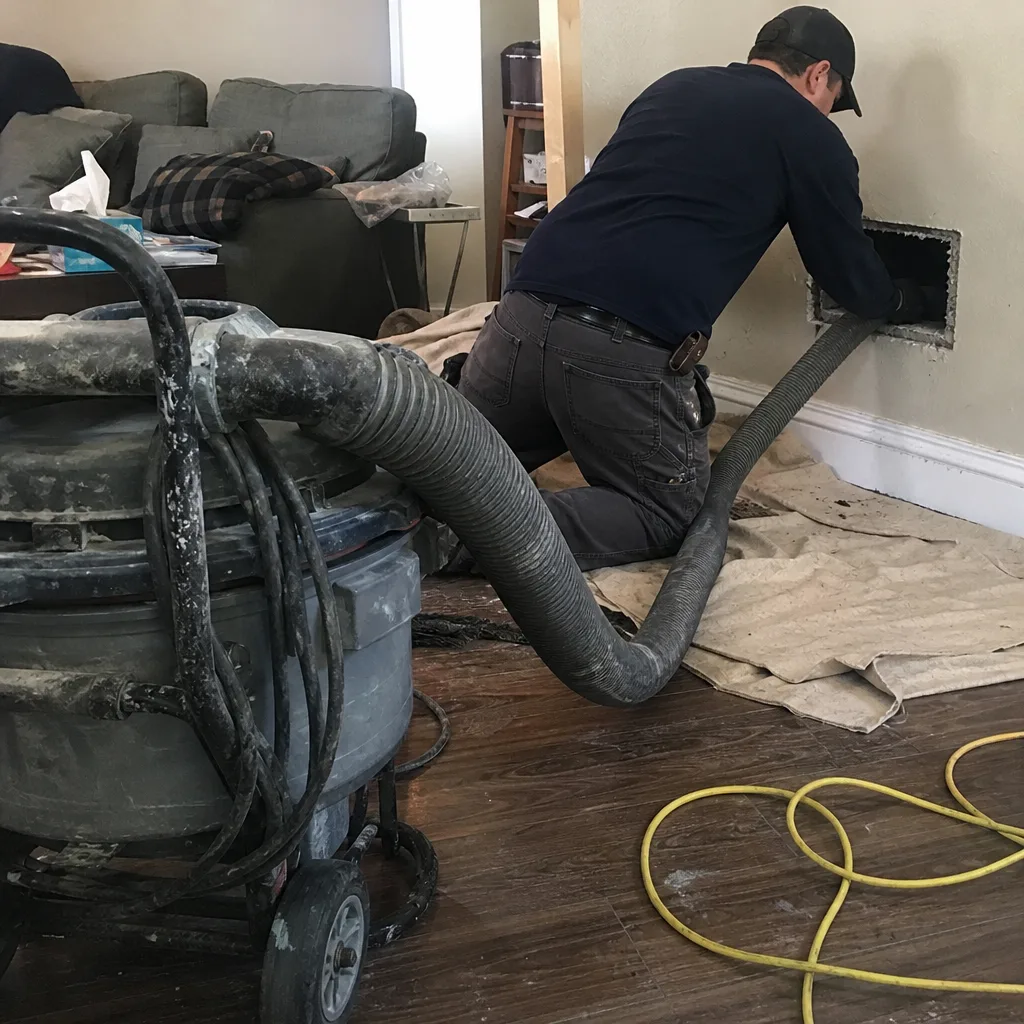 Before
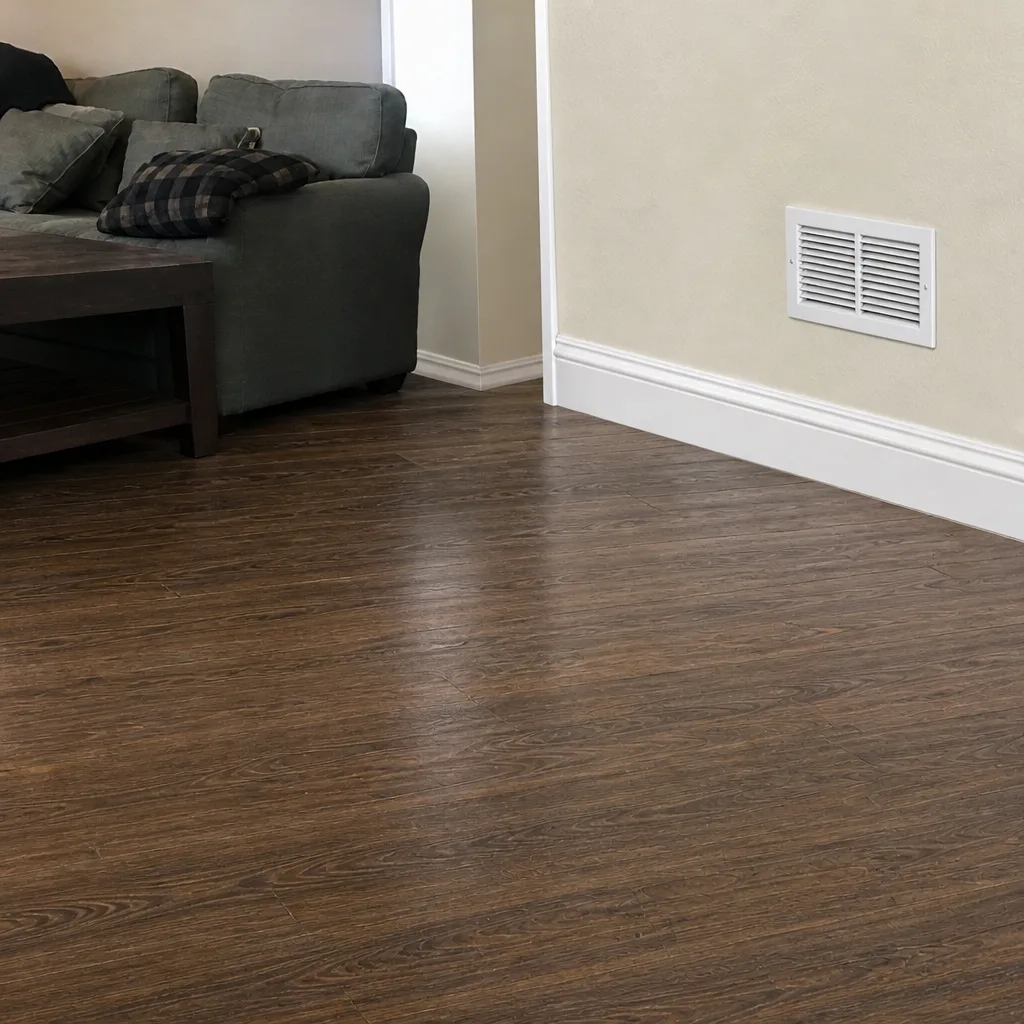 After
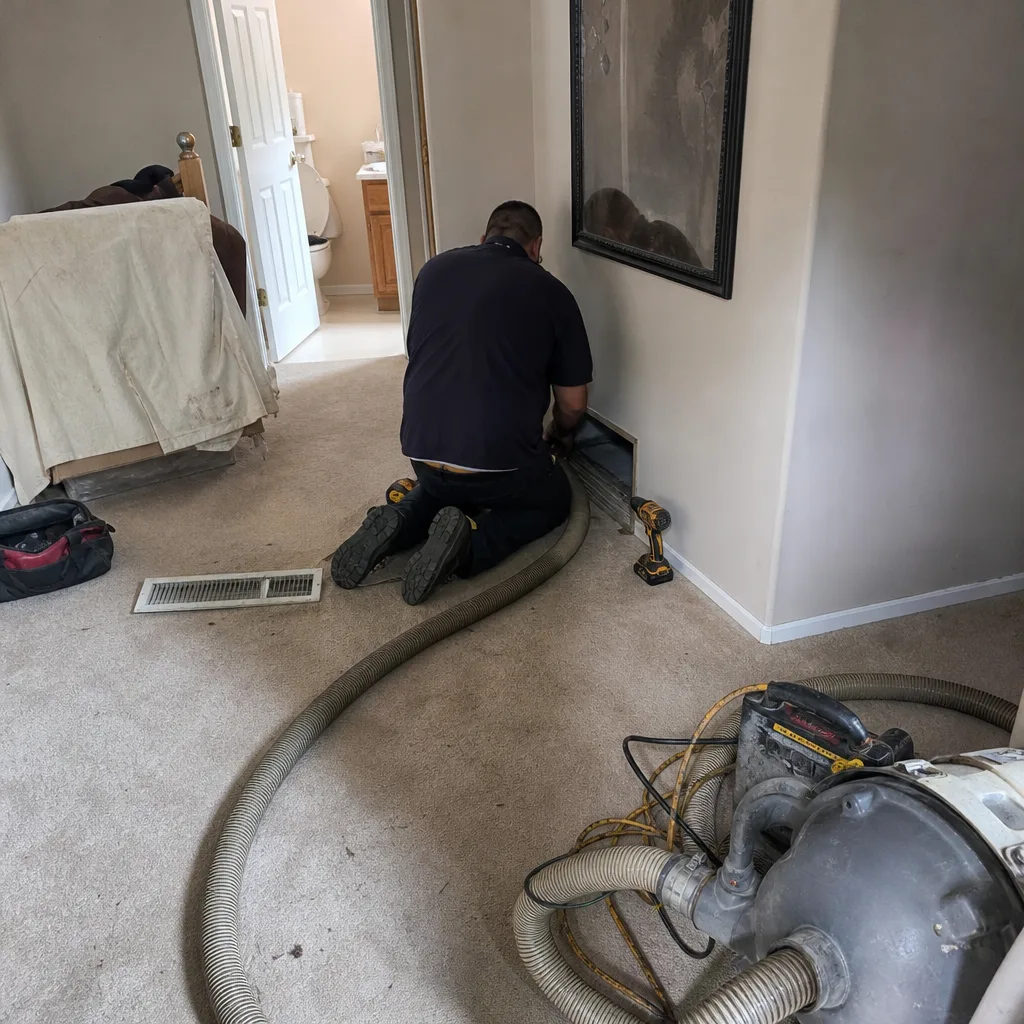 Before
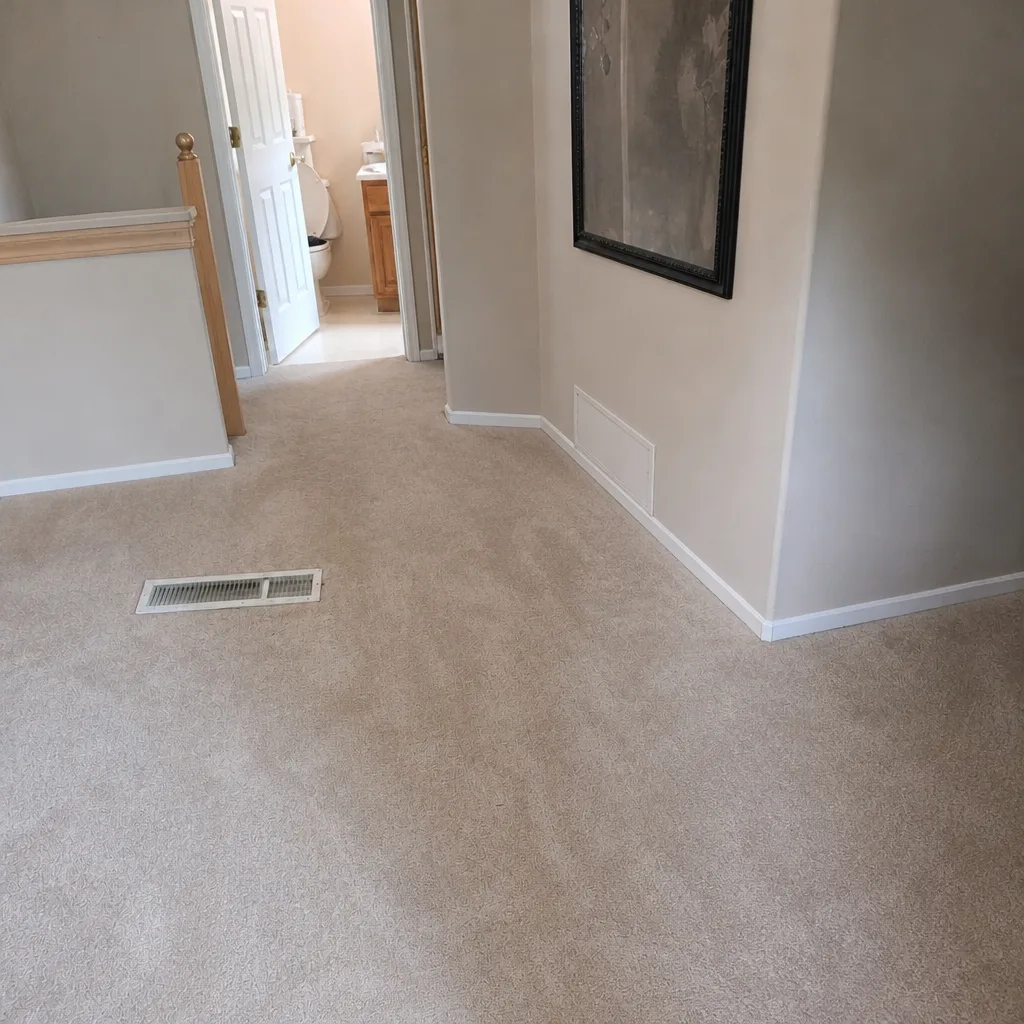 After
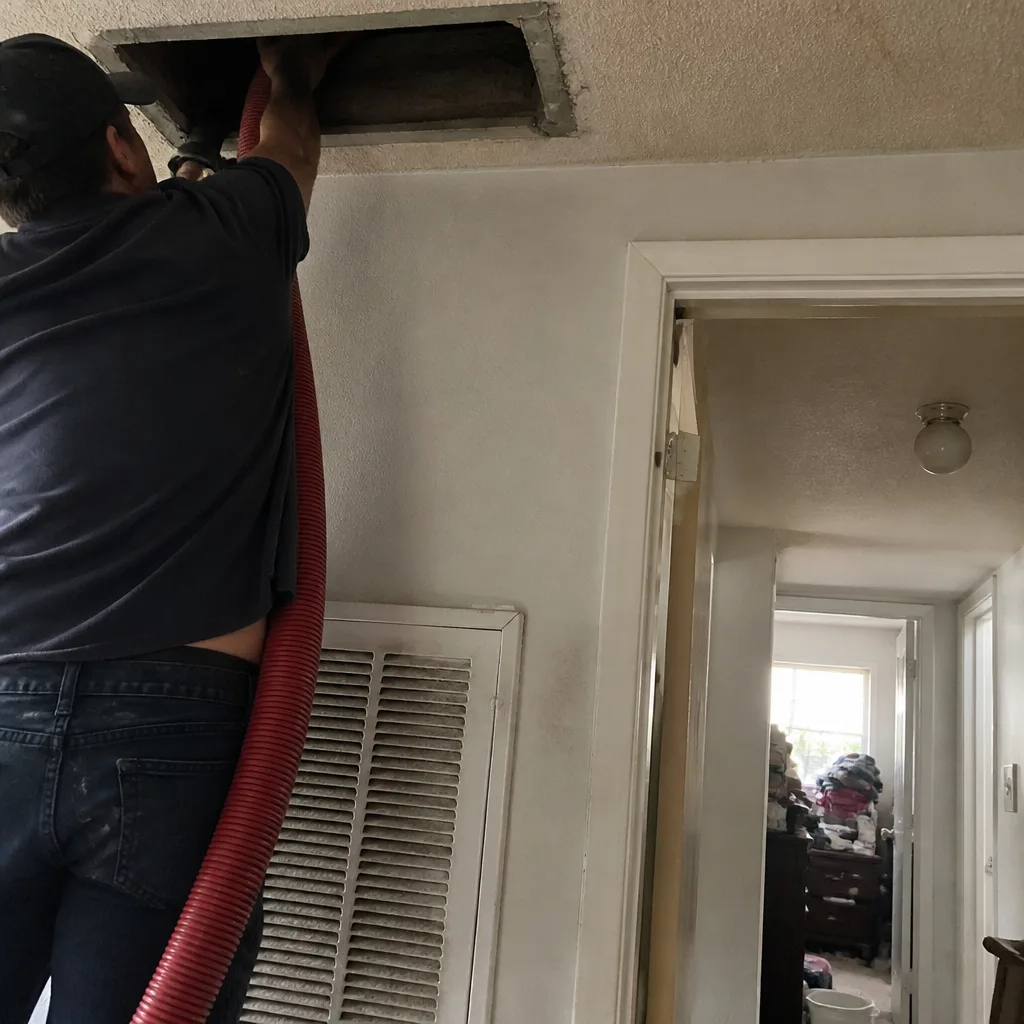 Before
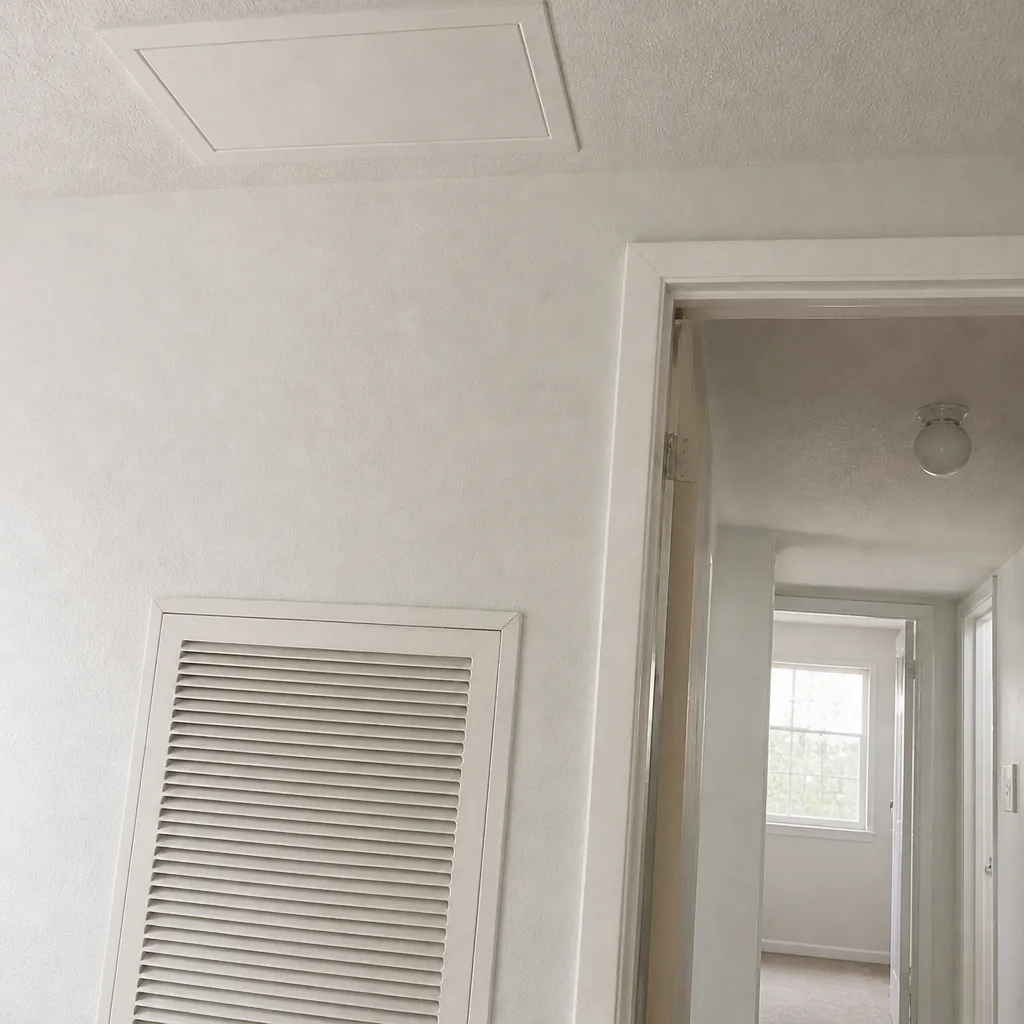 After
When to Call a Professional
Call a professional if any of the following applies: you’ve tested the register wipe and found duct-sourced dust, one or more rooms stay consistently too hot or cold no matter what the thermostat is set to, a musty or metallic smell concentrates at specific registers, the flashlight inspection shows heavy debris coating inside the duct work, or the dryer vent has never been cleaned in your home. If two or more of those signs are present, the sensible approach is a full-system inspection that covers every component of your duct work in a single visit, including repair and sealing where needed, rather than piecemeal re-cleaning.
Centennial Air Duct Cleaning Pros offers free estimates in Centennial – call (877) 820-8053. We answer 24/7. Fast dispatch from 7am to 7pm, Sunday through Friday.
Frequently Asked Questions
Most Centennial homes benefit from professional duct cleaning every three to five years, with some needing it sooner. Homes with pets, recent remodeling, allergy sufferers, or a fast-loading HVAC filter often need it on the shorter end of that range. If your register wipe test shows heavy debris sooner than three years after cleaning, then the system load is higher than typical and the interval should be shorter. Call (877) 820-8053 for a free estimate – we’ll tell you honestly whether the system needs cleaning now or can wait.
The cheapest quotes almost always reflect either a compressed-air blow-out rather than real mechanical cleaning, or a per-vent price that gets adjusted upward once the technician is on site. A blow-out loosens debris but doesn’t extract it, so the ducts end up in roughly the same condition with the debris redistributed. A real mechanical clean uses brush-contact systems like Rotobrush with HEPA vacuum extraction, which is why a fair price is set as one flat price per system agreed before work starts. Ask the company what equipment they’re bringing before comparing on price. Call (877) 820-8053 for a free estimate – our pricing is set before we start.
Sometimes. If the cause is debris load or a balancing damper issue, cleaning plus damper adjustment usually resolves it. If the cause is a disconnected or pinched flex duct run, cleaning alone won’t fix it and the duct needs repair or sealing. The right next step is an inspection that checks each register’s airflow and opens the duct work at the problem register. Call (877) 820-8053 for a free estimate so we can identify which of the two it is before recommending work.
Duct cleaning focuses on the distribution system that moves air from the furnace or air handler to the rooms – the supply and return duct work, the registers, and the plenum connections. HVAC cleaning includes that plus the air handler cabinet, the evaporator coil area, and the components that directly move and condition the air. Most Centennial homes with visible duct debris also benefit from HVAC cleaning at the same time. It’s one visit for the full system rather than two trips.
Yes, if it’s been more than a year or two since the last cleaning. Dryer vent cleaning is a separate scope from duct cleaning, but it addresses a genuine fire risk that air-duct equipment can’t reach. Lint buildup in the dryer vent is invisible from the laundry room and only confirmable by running a cleaning tool through the full length of the vent. Booking both in one visit is the practical way to handle it. Call (877) 820-8053 for a free estimate on both.
The two things to ask for after the job are before-and-after photos of your own duct work and a register wipe test you perform yourself 48 hours later. Real mechanical cleaning with brush and HEPA equipment produces visibly cleaner duct interior walls, and the before-and-after documentation should show your specific system, not stock photos. If the company can’t produce photos of your ducts, the work wasn’t properly documented. Call (877) 820-8053 for a free estimate – we photograph every system we clean.
The Bottom Line
Duct problems are quiet. They show up as a filter that loads too fast, one room that never feels right, a smell at a single register, or a wipe test that keeps coming back gray and gritty. In Centennial, the dry climate and mixed flex-and-sheet-metal duct construction make the failure patterns predictable once you know what to look for, which is what this guide is for. Cleaning with proper brush-and-vacuum equipment resolves debris and odor issues. Repair and sealing resolve disconnected or leaking runs. Dryer vent cleaning is a separate fire-safety service worth booking at the same time. If more than two warning signs are present, get a proper inspection before spending on filters, thermostats, or “blow-out” cleaning that won’t address the real cause. The full scope – Centennial Air Duct Cleaning Pros, cleaning, repair, sealing, HVAC cleaning, and dryer vent work – is what makes the fix stick.
If you’re seeing several of these signs and want an honest read on your system, call (877) 820-8053 for a free estimate. We answer 24/7. Fast dispatch from 7am to 7pm, Sunday through Friday.
Written by the team at Centennial Air Duct Cleaning Pros.